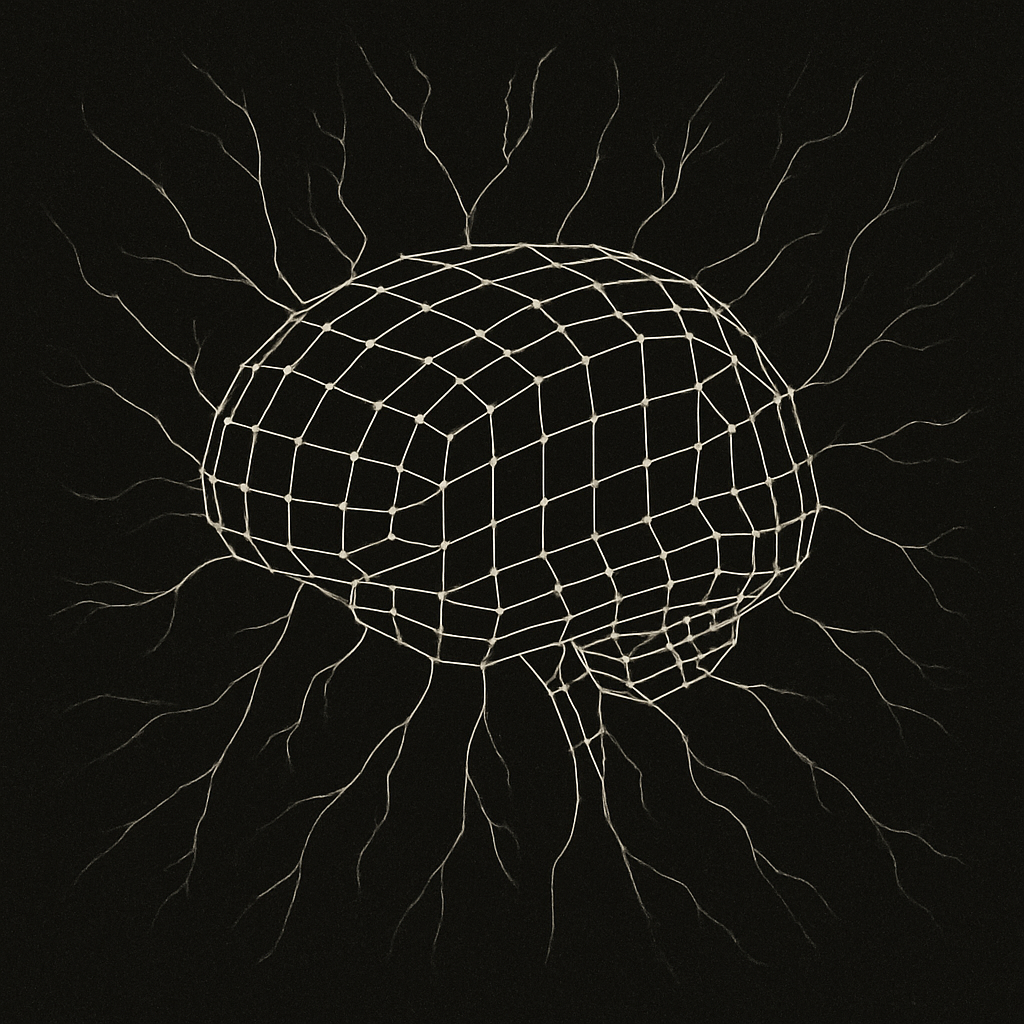
THE MACHINERY OF NO MIND
A Complete Guide to the State That Operates When You Disappear
What Every Tradition Describes and None of Them Explain
What follows is not meditation instruction.
It is not mindfulness. Not presence practice. Not a technique for calming yourself down. Not a system for reducing stress or improving focus. Not a path to enlightenment described in terms borrowed from someone else’s realization.
It is mechanism.
The actual machinery beneath the phenomenon that every contemplative tradition in human history has independently discovered, named differently, and failed to transmit reliably. The Japanese called it mushin. The Chinese called it wu wei. The Greeks glimpsed it in their concept of ataraxia. Zen masters built entire pedagogies around producing it. Sport psychologists rediscovered it as flow and immediately misunderstood what they had found.
The phenomenon is this: there is a mode of operation available to every human brain in which the self disappears and the system runs better.
Not metaphorically. Not poetically. Computationally.
The mind that is running right now, the one reading these words, the one checking whether it agrees, the one monitoring itself for understanding. That entire layer can go offline. When it does, what remains is not less than what was there. It is more. Not more thoughts. More throughput. More precision. More reality arriving without the distortion of the thing that usually sits between you and the world.
That thing has a name. It is called you.
This document is the machinery underneath what happens when you stop.
PART ONE: THE SELF AS COMPUTATION
What Is Running Right Now
Before you can understand no-mind, you must understand mind. Not mind in the philosophical sense. Mind in the computational sense. What the brain is doing right now, as you read this, that it would not be doing if the self-layer were offline.
The brain runs a default mode network. This is not a metaphor. It is a measurable set of neural structures. Medial prefrontal cortex. Posterior cingulate cortex. Temporal-parietal junction. These structures activate not when you are doing something, but when you are not doing anything specific. They activate when you are being someone.
The default mode network does three things.
First: it models you. It maintains a continuous, updated representation of who you are. Your history. Your preferences. Your fears. Your position relative to others. Your status. Your trajectory. This model is expensive. It consumes roughly 20% of the brain’s metabolic budget even when you are sitting still doing nothing.
Second: it projects you into time. It simulates your past (what you did, what you should have done) and your future (what might happen, what you need to prepare for). This is the machine that produces regret and anxiety. Not as emotions. As computations. The brain running scenarios that involve you.
Third: it evaluates everything against the self-model. Every perception, every thought, every sensation passes through a filter that asks: what does this mean for me? Is this good or bad for me? Does this confirm or threaten my model of who I am?
This filter is not optional. It is not something you choose to run. It runs by default. It is the default. That is why they called it the default mode network.
    THE SELF-LAYER

    ┌──────────────────────────────────────────────────┐
    │                                                   │
    │   RAW PERCEPTION                                  │
    │       │                                           │
    │       ▼                                           │
    │   ┌─────────────────────────────┐                 │
    │   │    SELF-REFERENTIAL FILTER  │                 │
    │   │                             │                 │
    │   │  "What does this mean for   │                 │
    │   │   me? Am I safe? Am I       │                 │
    │   │   good? Am I winning?"      │                 │
    │   └─────────────────────────────┘                 │
    │       │                                           │
    │       ▼                                           │
    │   DISTORTED PERCEPTION                            │
    │   (what you actually experience)                  │
    │                                                   │
    │   Cost: ~20% of brain's metabolic budget          │
    │   Status: ALWAYS ON (default mode)                │
    │   Override: rare, temporary, involuntary           │
    │                                                   │
    └──────────────────────────────────────────────────┘
You have never, in your entire life, experienced raw reality. Every moment of your conscious existence has been filtered through a system that asks what things mean for you before it lets you see what things are.
No-mind is what happens when that system goes quiet.
The Narrator
There is a specific component of the self-layer that matters more than the rest.
It is the narrator.
The part of the mind that talks. The inner monologue. The voice that describes what you are doing, interprets what is happening, evaluates your performance, plans the next move, rehearses conversations, replays mistakes, and never stops.
The narrator is not thinking. Thinking is what happens when the brain processes information. The narrator is commentary on the processing. It is a second-order operation. The brain solves the problem, and then the narrator tells you about the brain solving the problem. The brain perceives the threat, and then the narrator tells you about the threat. The brain generates the response, and then the narrator evaluates the response before it arrives.
This second-order operation has a cost that most people never compute.
Latency.
The narrator inserts a delay between perception and action. Between stimulus and response. Between what is happening and what you do about it. This delay is small in absolute terms. Hundreds of milliseconds. But hundreds of milliseconds is everything. In a conversation, it is the difference between a response that arrives naturally and one that arrives after a visible pause. In a physical skill, it is the difference between fluid movement and hesitation. In a crisis, it is the difference between action and freeze.
The narrator does not make you smarter. It makes you slower. And then it tells you that the slowness is intelligence.
The thought “I should say something” is not the same as saying something. The thought “I should move” is not the same as moving. The thought “I notice I am anxious” is not the same as responding to anxiety. The narrator produces a representation of action that substitutes for action itself. You feel like you have engaged with the situation because you have narrated your engagement. But the situation did not receive your narration. It received your delay.
PART TWO: WHAT NO-MIND ACTUALLY IS
The Dropout
No-mind is not the absence of thought.
This is the single most consequential misunderstanding in the entire contemplative tradition. Every beginner who sits down to meditate attempts to stop thinking. Every instructor who teaches “empty your mind” is pointing at the wrong target. And every person who fails to stop thinking and concludes that meditation does not work for them has been defeated by a misunderstanding, not by a limitation.
The brain does not stop thinking. The brain cannot stop thinking. Thinking is not a behavior. It is a process. Telling the brain to stop thinking is like telling the heart to stop pumping. The organ does what the organ does.
No-mind is not the cessation of thought. It is the dropout of the self-referential layer that monitors, narrates, and evaluates thought.
Thoughts still arise. Perceptions still arrive. Computations still run. The brain is fully operational. What has gone offline is the process that takes ownership of these operations. The process that says “I am thinking this.” The process that evaluates whether the thought is good or bad. The process that monitors performance. The process that projects self-image into every moment.
The thoughts continue. The “I” that claims them does not.
This is the state.
It is not empty. It is the opposite of empty. It is more full than ordinary consciousness because nothing is being filtered out. More information arrives because less is being discounted. More options are visible because the self-model is not preselecting for options that confirm its own narrative.
The subjective experience is not blankness. It is vividity. Colors are more saturated. Sounds are more precise. Time changes texture. Not slower or faster. Thicker. More present. Like the resolution of experience increased.
This is not mystical. This is computational. A system running without a 20% overhead processes more per cycle. A perception pipeline without a self-referential filter passes more signal. A response system without a narrator inserts less latency. The math is simple. The implications are not.
    ORDINARY MIND vs NO-MIND

    ORDINARY:
    ┌──────────────────────────────────────────────────┐
    │                                                   │
    │   Perception → Narrator → Evaluation → Response   │
    │                    │           │                   │
    │               (delay)    (distortion)              │
    │                                                   │
    │   Throughput: ~80% (20% consumed by self-layer)   │
    │   Latency: +200-500ms (narration + evaluation)    │
    │   Signal fidelity: degraded (filtered for self)   │
    │                                                   │
    └──────────────────────────────────────────────────┘

    NO-MIND:
    ┌──────────────────────────────────────────────────┐
    │                                                   │
    │   Perception → Response                           │
    │                                                   │
    │   Throughput: ~100%                               │
    │   Latency: minimal                                │
    │   Signal fidelity: raw                            │
    │                                                   │
    └──────────────────────────────────────────────────┘

    The same brain. The same body. One process removed.
    Everything else improves.
The Paradox of Trying
Here is why no-mind is rare.
Every attempt to produce it reinforces the system it attempts to dissolve.
The thought “I want to achieve no-mind” is generated by the self-layer. The effort “I am trying to quiet my thoughts” is monitored by the narrator. The evaluation “Am I there yet?” is run by the self-referential filter. Every deliberate move toward the state is a move made by the thing that must disappear for the state to arrive.
This is not a koan. It is not a riddle designed to frustrate the rational mind into surrender. It is a straightforward engineering problem. The control system cannot shut itself down. A thermostat cannot turn off the thermostat. The governor cannot fire the governor. The process that regulates attention cannot redirect attention away from itself because the redirection IS itself.
This is why effort fails. Not because effort is bad. Because effort, in this specific context, is the problem wearing the costume of the solution.
The meditator who tries harder to quiet the mind produces more activity in the self-referential network, not less. The athlete who tries to get into the zone by thinking about getting into the zone pushes the zone further away. The speaker who monitors themselves for naturalness produces unnaturalness. The lover who tries to be present is, by the act of trying, absent.
Every tradition that has solved this has solved it the same way. Not by adding a technique. By arranging conditions under which the self-layer runs out of material.
What Actually Produces the State
Four conditions. Not techniques. Conditions.
Absorption. The most reliable route. The task absorbs all available attention. The self-layer loses resources because the task claims them. There is not enough metabolic budget to simultaneously process a challenging task and maintain the self-model. Something has to give. When the task wins, the self drops. This is what athletes experience as flow. It is not a mystical state. It is a resource allocation outcome. The task was more demanding than the self, so the brain cut the self.
Exhaustion. The self-layer runs on glucose and oxygen like everything else. Sustained effort depletes the resources available for self-monitoring. Marathon runners at mile 22 are not in a mystical state. They are in a metabolic state where the brain cannot afford the self-layer. The narrator goes quiet because the brain triaged it. The experience is described as transcendent because the person has never experienced their own mind without narration.
Shock. A sudden input that exceeds the self-model’s processing capacity. The car accident. The near-death experience. The moment of extreme beauty or terror. The self-layer cannot process the input fast enough, so it crashes. What remains is direct perception without the filter. People describe these moments as time stopping. Time did not stop. The process that tracks time relative to the self stopped. What they experienced was the raw temporal signal without the self-referential distortion.
Surrender. The least understood and most powerful. The self-layer stops not because it was outcompeted, depleted, or crashed, but because it gave up. Not gave up trying. Gave up being. The distinction is absolute. Giving up trying is still an act of the self. Giving up being is the self recognizing its own optional nature. This is what the mystics describe. Not effort ending. Identity ending. The recognition, felt rather than thought, that the self is a process that can stop, and that stopping it is not death but relief.
    FOUR ROUTES TO NO-MIND

    ┌──────────────────────────────────────────────────┐
    │                                                   │
    │  ABSORPTION                                       │
    │  Task claims all resources. Self runs out of      │
    │  budget. Drops involuntarily.                     │
    │  Reliability: HIGH  Duration: task-dependent      │
    │                                                   │
    │  EXHAUSTION                                       │
    │  Metabolic depletion. Brain triages self-layer.   │
    │  Narrator loses power.                            │
    │  Reliability: MODERATE  Duration: brief           │
    │                                                   │
    │  SHOCK                                            │
    │  Input exceeds model capacity. Self crashes.      │
    │  Direct perception without filter.                │
    │  Reliability: LOW  Duration: seconds-minutes      │
    │                                                   │
    │  SURRENDER                                        │
    │  Self recognizes its own optional nature.          │
    │  Stops maintaining itself. Not forced. Released.   │
    │  Reliability: LOWEST  Duration: variable-permanent │
    │                                                   │
    └──────────────────────────────────────────────────┘

    The first three are common. Brief. Involuntary.
    The fourth is rare. And it is the only one that
    changes anything permanently.
PART THREE: WHY EVERY METHOD FAILS
The Meditation Problem
Meditation, as taught to the vast majority of practitioners, does not produce no-mind. It produces a more sophisticated self.
This is not an accusation. It is a structural observation.
The instruction “observe your thoughts without judgment” creates an observer. The observer is the self in a new costume. It has the same neural substrate. It runs on the same resources. It consumes the same metabolic budget. The only difference is that instead of narrating, it is now observing. The activity changed. The agent did not.
The meditator who practices observing thoughts for ten years becomes very good at observing thoughts. They become calm. Centered. Less reactive. These are real benefits. They are not no-mind. They are a refined self. A self that has practiced non-reactivity so thoroughly that non-reactivity has become part of its identity.
The tell is this: ask the experienced meditator who they are. They will tell you. They have a spiritual identity. They have a story about their practice. They have a model of their progress. They have preferences about meditation styles and opinions about other people’s practices. The self is intact. It has merely upgraded its operating system.
No-mind is not an upgrade. It is an uninstall.
The meditator who encounters actual no-mind is terrified. Not because the state is frightening. Because the state has no one in it. No observer. No meditator. No one to claim the experience. No one to add it to their spiritual resume. The experience happens and no one is there to experience it. This is intolerable to a self that has spent years building a meditation identity.
This is why serious Zen practice involves deliberate assault on the practitioner’s identity. The koans, the physical discomfort, the arbitrary authority of the teacher. These are not sadism. They are engineering. The system being disassembled will not disassemble itself voluntarily. It must be stressed until it cracks. Not the person. The self-model the person is running.
The Flow Problem
Sport psychology discovered no-mind in the 1970s and immediately domesticated it.
Csikszentmihalyi’s flow model identified the phenomenology correctly. Complete absorption. Loss of self-consciousness. Time distortion. Intrinsic reward. Automatic performance. These are accurate descriptions of what happens when the self-layer drops during skilled activity.
The domestication happened when the field tried to make it reliable.
Flow became a target. Something to achieve. Something with conditions that could be optimized. Challenge-skill balance. Clear goals. Immediate feedback. These are real correlates. They do predict conditions under which flow is more likely. But turning flow into a goal for the self to pursue destroyed the very thing that made flow valuable: the absence of the self that was now pursuing it.
The athlete who is “trying to get into flow” is running the self-referential layer at full power. They are monitoring themselves for signs of flow. They are evaluating their state. They are comparing current performance to their model of flow performance. The narrator is louder than ever, narrating its search for the state in which narration ceases.
The athlete who actually enters flow did not try. They were absorbed. The task took everything. There was nothing left for the self. The flow was not achieved. The self was outcompeted.
The difference between the flow researcher’s model and the actual mechanism is the difference between describing the weather and controlling it. The description is accurate. The control is an illusion. You cannot produce no-self by giving the self instructions.
The Enlightenment Problem
The contemplative traditions that claim to produce permanent no-mind share a structural problem.
They create hierarchies. Stages of attainment. Levels of realization. Maps of the territory between ordinary consciousness and enlightenment. First jhana, second jhana, third jhana. Stream entry, once-returner, non-returner, arahant. Kensho, satori, deeper satori.
Every stage is something the self can locate itself on. Every level is a position the self-model can occupy. The map that is supposed to guide you to the dissolution of the self becomes the landscape in which the self builds a new home.
The practitioner who has achieved “stream entry” now has a spiritual identity more solid than the one they started with. They know where they are. They know where they are going. They know what they have accomplished. The self is not diminished. It is fortified. It has been promoted from ordinary self to spiritual self, and the promotion is experienced as progress toward selflessness.
This is the deepest joke in the entire contemplative tradition. The map of no-self is the most effective tool for self-construction ever invented.
The traditions that understood this. The ones that lasted. They embedded the correction. Zen’s “if you meet the Buddha, kill the Buddha.” Dzogchen’s insistence that there is nothing to achieve. The Sufi teaching that the seeker is the obstacle. Each of these is not a paradox. It is a warning. The map is the trap. The path is the wall. The seeker is the sought’s only obstacle.
PART FOUR: THE ACTUAL ARCHITECTURE
What the Brain Is Doing
The default mode network has a property that the spiritual traditions could not have known but that explains everything.
It is anticorrelated with the task-positive network.
When the default mode network (self-referential processing) is active, the task-positive network (direct engagement with the world) is suppressed. When the task-positive network is active, the default mode network is suppressed. They compete for the same resources. They cannot both run at full power.
This is not a design flaw. It is a design constraint. The brain has finite metabolic budget. Self-modeling and world-modeling draw from the same pool. The brain’s solution is to toggle between them. When you are doing something demanding, the self-model drops. When you are not doing anything demanding, the self-model runs.
No-mind is the state in which the toggle is stuck on task-positive.
Not permanently. Not through willpower. Through a combination of conditions that keep the task-positive network engaged long enough for the default mode network to lose coherence. The self-model, deprived of metabolic resources, begins to fragment. The narrative loses continuity. The self-referential checks miss cycles. Gaps open in the monitoring.
In those gaps: reality.
Not reality as the self construes it. Reality as it arrives before the self construes anything. Raw signal. Unfiltered perception. Direct apprehension of what is actually happening without the layer that reorganizes it into what it means for you.
This is what people describe as awakening. Not a new thing appearing. The filter being absent for the first time. The shock is not at what is seen. The shock is at realizing how much was invisible before. Not hidden. Filtered. By a system so constant that its presence was not noticed until it was gone.
    ANTICORRELATION: THE TOGGLE

    ┌──────────────────────────────────────────────────┐
    │                                                   │
    │   DEFAULT MODE           TASK-POSITIVE             │
    │   (self-referential)     (direct engagement)       │
    │                                                   │
    │   ████████████           ░░░░░░░░░░░░             │
    │   Self ON                World OFF                 │
    │                                                   │
    │   ░░░░░░░░░░░░           ████████████             │
    │   Self OFF               World ON                  │
    │                                                   │
    │   They cannot both run at full power.              │
    │   When one rises, the other falls.                │
    │   The brain switches between being someone         │
    │   and engaging with something.                     │
    │                                                   │
    │   No-mind: the toggle held on WORLD.               │
    │   Long enough for SELF to lose coherence.          │
    │                                                   │
    └──────────────────────────────────────────────────┘
The Coherence Threshold
The self-model has a coherence threshold. Below this threshold, it cannot maintain narrative continuity. Above it, the narrative runs automatically.
Think of it as a pilot light. The self-model runs continuously, but it requires a minimum level of activation to maintain the story of who you are. If the activation drops below the threshold for long enough, the narrative breaks. Not the capacity for narrative. The specific narrative that constitutes “you.”
When the narrative breaks, several things happen simultaneously.
The inner monologue stops. Not because you stopped it. Because the system that generates it lost coherence. The voice in your head is not a permanent feature of consciousness. It is a product of a specific neural network running above its coherence threshold. Drop the network below threshold and the voice goes quiet. Not silenced. Absent.
Time perception changes. The self-model is the brain’s clock for subjective time. It tracks time relative to your narrative. Past events are dated by their position in your story. Future events are anticipated relative to your trajectory. Without the self-model, there is no narrative to date events against. What remains is the raw temporal signal: the present, without thickness, without position.
Perception clarifies. The self-referential filter is the primary source of perceptual distortion in ordinary consciousness. Not distortion in the optical sense. Distortion in the relevance sense. The filter suppresses information that is irrelevant to the self-model and amplifies information that is relevant. Remove the filter and the relevance weighting disappears. Everything arrives with equal salience. The bird call and the car alarm and the texture of the floor and the temperature of the air. All of it, at full resolution.
This is overwhelming for approximately 30 seconds. Then it is the most natural thing the brain has ever done.
PART FIVE: THE PERMANENT SHIFT
Why Some People Stay
The question that every tradition grapples with: why does the state come and go?
The standard answer involves spiritual development. Purification. Merit. Karma. Stages of attainment. All of which are descriptions of the self-model’s attempts to explain what is happening to the self-model.
The actual answer is simpler.
The self-model is a habit. It has been running for decades. It has neural pathways as deep as any other habitual pattern. When it drops below the coherence threshold, it does not disappear. It loses activation. The pathways are still there. The patterns are still stored. The moment metabolic resources become available, the patterns reactivate. The narrative resumes. The self reboots.
This is why glimpses of no-mind are common and sustained no-mind is rare. The glimpse is easy. The task-positive network wins for a moment. The self drops. But the self has decades of habitual activation behind it. It comes back. Not because it is necessary. Because it is grooved. The neural pathways are deep and the reactivation is automatic.
The people who stay in no-mind are not the people with the strongest will or the deepest practice. They are the people for whom the self-model lost coherence long enough that the reactivation pathways weakened. The habit of self was interrupted for long enough that the habit began to decay.
This is neuroplasticity applied to identity. A pathway that is not activated weakens. A pathway that is activated strengthens. If the self-model goes offline for hours, days, or weeks, the pathways that maintain it begin to prune. The reactivation becomes less automatic. The self comes back less completely. Gaps appear that used to be filled. Silences where narration used to run.
Eventually, the self-model still has the capacity to activate. But it no longer activates by default. It activates when called. When needed. When the situation requires a model of who you are and what you want. And then it goes quiet again.
This is the permanent shift. Not the destruction of the self. The demotion of the self from operating system to application. It stops running in the background. It starts only when invoked.
    THE DEMOTION

    BEFORE:
    ┌──────────────────────────────────────────────────┐
    │  Self: OPERATING SYSTEM                           │
    │  Status: always on, always consuming              │
    │  Role: mediates all perception and action          │
    │  Override: rare, temporary, involuntary             │
    └──────────────────────────────────────────────────┘

    AFTER:
    ┌──────────────────────────────────────────────────┐
    │  Self: APPLICATION                                │
    │  Status: invoked when needed, idle when not       │
    │  Role: social interface, planning tool             │
    │  Override: self defers to direct perception         │
    │           by default                               │
    └──────────────────────────────────────────────────┘

    The self is not destroyed. It is reclassified.
    From background process to foreground tool.
    From identity to instrument.
What Remains
When the self-model demotes to application, what is the operating system?
Nothing.
Not “nothing” as a spiritual concept. Nothing as in: no system. No mediator. Perception arrives and action happens without an intermediary. The bird calls and you hear it. Not you-hear-it. Hearing happens. The problem presents and the solution computes. Not you-solving-it. Solving happens. The person speaks and the response forms. Not you-choosing-what-to-say. Speech happens.
This sounds like automatism. Like the lights are on but nobody is home. The opposite is true. The lights were always on. But somebody was standing in front of them, casting a shadow, and calling the shadow reality. Remove the person standing in front of the lights and the room is brighter than it has ever been.
The response that arises without a self is not mechanical. It is more intelligent than the self-mediated response. Not because some mystical intelligence takes over. Because the computational resources that were maintaining the self are now available for the actual task. Twenty percent more budget. Zero latency from narration. No distortion from self-referential filtering. The response is faster, more accurate, and more appropriate because nothing is wasted on maintaining the illusion that someone is generating it.
This is what the martial artist experiences in mushin. Not thoughtlessness. Selfless precision. The sword moves before the swordsman decides to move it. Not because the swordsman is fast. Because there is no swordsman. There is the situation, the training, and the response. The triangle closes without a fourth point.
This is what the musician experiences in performance that transcends technique. The music plays. Not “I play the music.” The music plays through the instrument that happens to include a body. The body knows what to do because it has trained. The self, had it been present, would only have interfered. Evaluating. Monitoring. Second-guessing. Adding noise to a signal that was already clean.
PART SIX: THE TRUTH THAT NO ONE SELLS
Why This Cannot Be a Product
No-mind is the only state in the entire human repertoire that resists commercialization.
Not because it is sacred. Because it has no customer.
The customer is the self. The self is what buys the course, downloads the app, books the retreat, hires the teacher, follows the guru. The self wants no-mind the same way it wants everything else: as an acquisition. Something to have. Something to be. Something to add to its model of itself.
But no-mind is the absence of the customer. The acquisition of no-mind is the dissolution of the acquirer. The self that wants it is the thing that must go. And the thing that must go will not purchase its own disappearance.
This is why the meditation industry is a trillion-dollar market that produces approximately zero cases of sustained no-mind per year. The market exists because the product cannot be delivered. The customer keeps buying because the customer can never receive. The guru keeps teaching because the teaching can never work. Not because the guru is a fraud (though many are). Because the mechanism is structural. You cannot sell the absence of the buyer to the buyer.
The person who arrives at no-mind does not arrive through a product. They arrive through a combination of conditions that they usually did not choose and cannot reliably reproduce. Extreme circumstances. Total absorption. Catastrophic loss. The rare teacher who understands that the teaching is not the delivery of content but the destruction of the container.
The traditions that work are the ones that understand this. They do not sell peace. They do not promise attainment. They make the self-model so uncomfortable, so contradicted, so exhausted, that it stops. Not because it was taught to stop. Because it ran out of reasons to continue.
The Honest Report
Here is what no-mind is actually like. Without the poetry. Without the reverence. Without the marketing.
It is ordinary.
That is the report. From everyone who has been there and is not selling something. The experience is profoundly, disappointingly, anticlimactically ordinary.
Not ordinary like boring. Ordinary like: this is clearly how things were always supposed to work. The extraordinary state was the one you were living in before. The state where a narrator was constantly commenting on reality. The state where a self-model was consuming a fifth of your brain’s output to maintain an illusion. THAT was the unusual state. THAT was the anomaly.
No-mind feels like coming home to a house you forgot you owned. There is no fireworks. No cosmic consciousness. No union with the divine. There is just this. Whatever is happening. Without the layer that reorganizes it into a personal drama.
The cup of coffee is just the cup of coffee. Not the cup of coffee while you plan your day. Not the cup of coffee while you regret yesterday. Not the cup of coffee while you monitor yourself drinking the cup of coffee. Just the cup. The warmth. The taste. The morning. None of it means anything. All of it is complete.
People expect fireworks because the traditions promised fireworks. The traditions promised fireworks because fireworks sell. The truth. The quiet, ordinary, anticlimactic truth. Does not sell. Because there is nothing to sell. And no one left to buy it.
The Only Instruction
If there is one instruction. If the entire apparatus of contemplative tradition and neuroscience and mechanism could be reduced to a single operational directive. It is this.
Stop maintaining yourself.
Not stop being yourself. You cannot stop being yourself because there is no yourself to stop being. The self is a process, not an entity. You cannot stop a process by opposing it. You can only stop a process by ceasing to fuel it.
The fuel is attention to the self-model. Every time you check how you are doing, you fuel the model. Every time you evaluate your performance, you fuel it. Every time you imagine how you appear to others, you fuel it. Every time you plan based on who you think you are, you fuel it. Every time you regret based on who you think you were, you fuel it.
You do not need to fight these patterns. You do not need to observe them mindfully. You do not need to accept them with compassion. You do not need to do anything with them at all.
You need to find the thing in front of you. The actual thing. Not the thing as it relates to you. The thing as it is. And give it everything.
Not as a technique. Not as a practice. Not as the first step in a seven-step program. As the only thing. The complete response to being alive. Something is here. Give it your full attention. Not your attention-while-monitoring-your-attention. Your attention.
When you do this, the self has nothing to eat. It runs on self-referential attention the way a fire runs on oxygen. Remove the oxygen and the fire does not fight. It goes out.
It was never alive. It was a process that looked alive from inside. And you were always inside it.
Until you were not.
Nothing more.
What you do with this is your business.