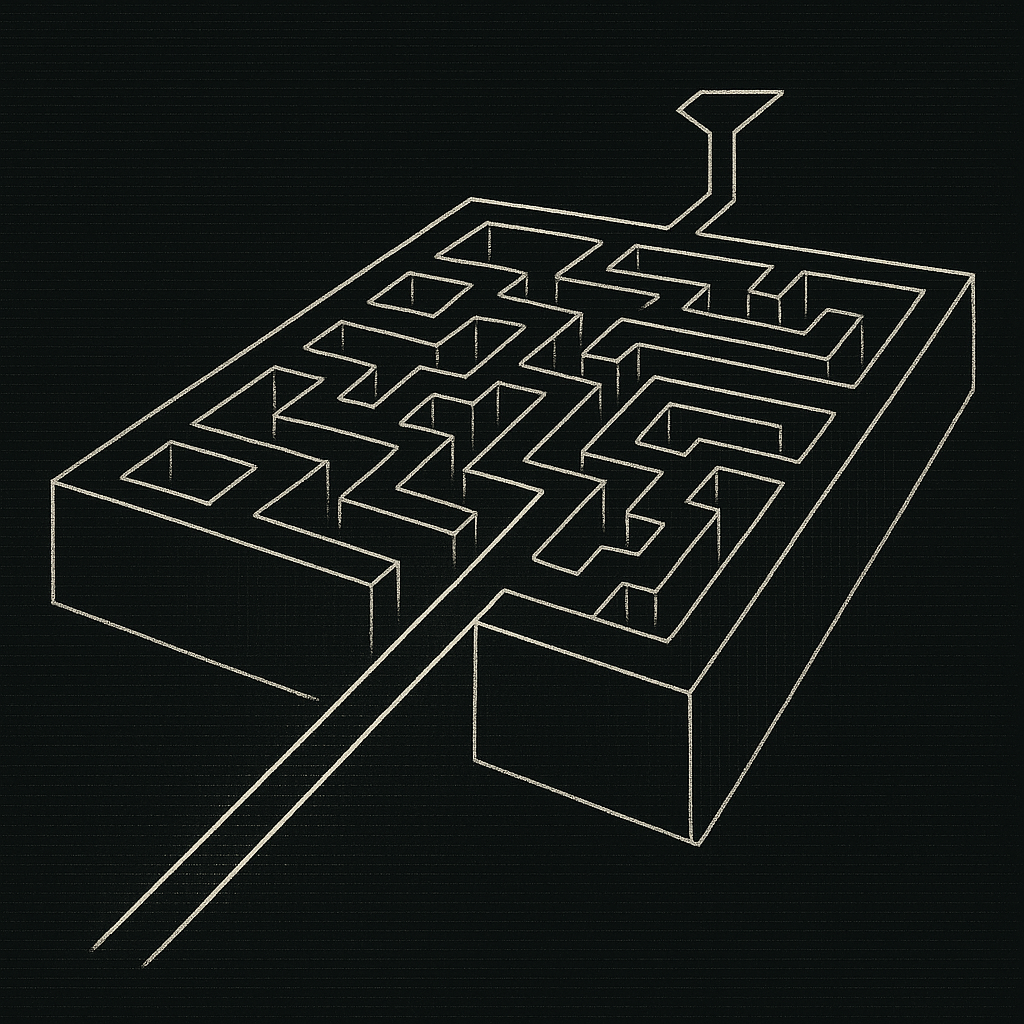
THE MACHINERY OF DECISION ARCHITECTURE
A Complete Guide to How Decisions Actually Get Made
Why the Structure Determines the Outcome Before Anyone Chooses
What follows is not advice.
It is not a decision framework. Not a matrix. Not seven habits of highly effective deciders. Not a meeting template.
It is mechanism.
The actual machinery that determines, before anyone sits down to choose, what they will choose and how fast they will choose it. The structural properties of decision environments that make outcomes nearly inevitable regardless of the intelligence of the people inside them.
Most operators believe decisions are about judgment. Good leaders make good decisions. Bad leaders make bad ones. If only they were smarter, faster, better informed.
This is wrong.
Decisions are architecture. The environment in which a decision is made determines the decision more reliably than the mind making it. The same person, placed in two different decision architectures, will produce two different outcomes. Not because they changed. Because the structure changed.
This document is a description of that structure.
What the operator reading it does next is their business.
PART ONE: THE REFRAME
Decisions Are Not Events
The conventional picture of a decision is a moment. A fork in the road. A leader sits at the desk, weighs the options, picks one. The decision is the picking.
This model is almost completely wrong.
A decision is the output of a system. The system includes what information reaches the decider. What options are visible. What the default is if no one acts. How much time pressure exists. How many other decisions have already been made that day. Who else is in the room. What was decided last time in a similar situation.
By the time the “moment of choice” arrives, the architecture has already constrained the outcome to a narrow band. The leader is not choosing freely from infinite possibility. The leader is selecting from the options the architecture has surfaced, under the time pressure the architecture has imposed, with the cognitive resources the architecture has left available.
Herbert Simon, who won the Nobel Prize in Economics in 1978, identified this in his concept of bounded rationality. Human beings do not optimize. They cannot. The computational requirements of true optimization exceed human cognitive capacity by orders of magnitude. What humans actually do is satisfice. They search until they find an option that meets a minimum acceptable threshold. Then they stop.
    THE DECISION REALITY

    ┌──────────────────────────────────────────────────────────┐
    │                                                          │
    │                  THE MYTH                                │
    │                                                          │
    │    All options visible  →  Rational comparison  →  Best  │
    │                                                          │
    └──────────────────────────────────────────────────────────┘

    ┌──────────────────────────────────────────────────────────┐
    │                                                          │
    │                  THE REALITY                             │
    │                                                          │
    │    Few options surfaced  →  Satisficing search  →  First │
    │    by architecture           under constraint      that  │
    │                                                    meets │
    │                                                    bar   │
    │                                                          │
    └──────────────────────────────────────────────────────────┘
The implication is structural. Improving decision quality is not primarily about improving the decider. It is about improving the architecture.
The Three Layers
Every decision environment has three layers. They operate in sequence and each constrains the next.
Layer 1: What surfaces. Which options are visible, which information reaches the decider, what alternatives have been generated. If an option never appears, it cannot be chosen regardless of its quality.
Layer 2: What shapes comparison. How options are framed, what the reference point is, which criteria feel salient, what anchors have been set. Two identical options, framed differently, produce different choices reliably.
Layer 3: What happens by default. What occurs if no one acts, if the meeting ends without a decision, if the deadline passes without a choice. The default is the decision that requires zero energy to select. In most organizations, the default is the status quo.
    THE THREE LAYERS OF DECISION ARCHITECTURE

    LAYER 1: SURFACING
    ┌──────────────────────────────────────────────────────────┐
    │  What options are generated?                             │
    │  What information reaches the decider?                   │
    │  Who has access to contribute alternatives?              │
    │                                                          │
    │  CONSTRAINT: Unsurfaced options are unchosen options     │
    └──────────────────────────────────────────────────────────┘
                        │ filters into ▼

    LAYER 2: FRAMING
    ┌──────────────────────────────────────────────────────────┐
    │  How are options presented?                              │
    │  What is the reference point?                            │
    │  What anchors have been set?                             │
    │                                                          │
    │  CONSTRAINT: Framing shifts choice by 20-40% reliably   │
    └──────────────────────────────────────────────────────────┘
                        │ filters into ▼

    LAYER 3: DEFAULTS
    ┌──────────────────────────────────────────────────────────┐
    │  What happens if no one acts?                            │
    │  What is the path of least resistance?                   │
    │  What does "doing nothing" produce?                      │
    │                                                          │
    │  CONSTRAINT: 70-90% of people take the default           │
    └──────────────────────────────────────────────────────────┘
Thaler and Sunstein formalized this in their 2008 work on choice architecture. The person who designs the environment in which a decision is made has more influence over the outcome than the person making the decision. Organ donation enrollment rates swing from 12% to 99.9% between countries based solely on whether the form defaults to opt-in or opt-out. Same population. Same organs. Same medical system. Different default. Completely different outcome.
The operator who controls the architecture controls the output.
PART TWO: THE REVERSIBILITY AXIS
One-Way Doors and Two-Way Doors
Jeff Bezos, in his 2015 letter to shareholders, introduced a classification that cuts through most decision paralysis. Decisions divide into two types based on a single axis: reversibility.
Type 1 decisions are one-way doors. Walk through and you cannot walk back. The consequences are permanent or nearly so. Selling the company. Entering a market with massive fixed investment. Signing a ten-year lease. Firing a founding team member.
Type 2 decisions are two-way doors. Walk through, look around, and if the view is bad, walk back. The consequences are temporary and correctable. Launching a new menu item. Testing a pricing change. Hiring a contractor. Running a marketing experiment.
The structural insight is not the classification itself. It is the failure mode the classification reveals.
As organizations grow, they apply Type 1 process to Type 2 decisions. Every choice gets routed through committees. Every experiment requires approval chains. Every reversible action gets treated as irreversible.
The result is slowness. Unthoughtful risk aversion. Failure to experiment. And ultimately, diminished invention.
    THE REVERSIBILITY AXIS

    ◄─────────────────────────────────────────────────────────►

    TYPE 1                                              TYPE 2
    (One-Way Door)                                (Two-Way Door)

    • Irreversible                              • Reversible
    • High consequence                          • Low consequence
    • Slow process correct                      • Fast process correct
    • Consultation required                     • Delegation required
    • Failure is expensive                      • Failure is data

    Examples:                                   Examples:
    • Selling the business                      • New product test
    • Major acquisition                         • Pricing experiment
    • Core tech migration                       • Hiring a contractor
    • 10-year lease                             • Campaign creative

                        │
                        ▼
              ORGANIZATIONAL FAILURE MODE:

              Applying Type 1 process to Type 2 decisions.
              Making every two-way door feel like a one-way door.
              The cost: speed dies, experimentation dies, learning dies.
The 70% rule follows directly. Bezos operates on the principle that most decisions should be made with approximately 70% of the information the decider wishes they had. Waiting for 90% means waiting too long. The reasoning: if the decision is Type 2, being wrong costs little because the action is reversible. And being slow is guaranteed to be expensive.
This is not carelessness. It is recognition that the cost of slowness almost always exceeds the cost of correctable error. In competitive environments, the organization that decides at 70% and course-corrects will outpace the organization that decides at 95%. Not sometimes. Structurally.
PART THREE: THE SPEED MECHANISM
The OODA Loop
Colonel John Boyd developed the OODA loop in the 1970s while studying air combat maneuvering. The insight was not about dogfights. It was about the structural advantage of tempo in any competitive system.
OODA: Observe. Orient. Decide. Act.
The side that cycles through this loop faster than the opponent gains a compounding advantage. Not a linear advantage. A compounding one. Because the slower side is always responding to a reality that no longer exists. Their observations are stale. Their orientation is outdated. Their decisions address yesterday’s situation.
    THE OODA LOOP

         ┌──────────┐        ┌──────────┐
         │          │        │          │
         │ OBSERVE  │───────►│  ORIENT  │
         │          │        │          │
         └──────────┘        └────┬─────┘
              ▲                    │
              │                    ▼
         ┌────┴─────┐        ┌──────────┐
         │          │        │          │
         │   ACT    │◄───────│  DECIDE  │
         │          │        │          │
         └──────────┘        └──────────┘

    COMPETITIVE ADVANTAGE:

    ┌────────────────────────────────────────────────────┐
    │                                                    │
    │  Operator A: OODA cycle = 2 days                   │
    │  Operator B: OODA cycle = 2 weeks                  │
    │                                                    │
    │  After 4 weeks:                                    │
    │    A has completed 14 cycles                       │
    │    B has completed 2 cycles                        │
    │                                                    │
    │  A is operating on reality.                        │
    │  B is operating on a model of reality              │
    │  that is 12 iterations behind.                     │
    │                                                    │
    └────────────────────────────────────────────────────┘
The Orient phase is where most organizations bottleneck. Orientation requires synthesizing observations with context, experience, cultural assumptions, and previous results. In bureaucratic organizations, orientation is a meeting. Multiple meetings. An alignment session. A review with stakeholders. Each meeting adds days. Each added day means the observation feeding the orientation is older.
The practical consequence: decision speed is not primarily constrained by the time it takes to decide. It is constrained by the time it takes to orient. Shorten orientation and the entire loop accelerates.
The Asymmetric Cost Structure
There are two costs in every decision. The cost of being wrong. And the cost of being slow.
Most organizations overweight the first and ignore the second.
The cost of being wrong is visible. When a bad decision produces a bad outcome, everyone sees it. The blame is assignable. The failure is concrete.
The cost of being slow is invisible. When a decision is delayed, no one sees the opportunities that expired, the experiments that were never run, the market positions that were never tested. The cost manifests as absence. And absence does not generate blame.
    THE ASYMMETRIC COST STRUCTURE

    ┌──────────────────────────────────┐
    │                                  │
    │    COST OF BEING WRONG           │
    │                                  │
    │    • Visible                     │
    │    • Assignable                  │
    │    • Concrete                    │
    │    • Generates blame             │
    │    • Remembered                  │
    │                                  │
    │    Organizational response:      │
    │    Add process to prevent        │
    │                                  │
    └──────────────────────────────────┘

    ┌──────────────────────────────────┐
    │                                  │
    │    COST OF BEING SLOW            │
    │                                  │
    │    • Invisible                   │
    │    • Unassignable                │
    │    • Abstract                    │
    │    • Generates no blame          │
    │    • Forgotten                   │
    │                                  │
    │    Organizational response:      │
    │    None (cost not perceived)     │
    │                                  │
    └──────────────────────────────────┘
This asymmetry creates a ratchet. Every visible failure adds process. No invisible delay removes process. Over time, the organization accumulates decision weight monotonically. The ratchet only turns one direction.
This is why older organizations are slower than younger ones. Not because the people are different. Because the process accumulation is heavier. Every past failure has left its scar tissue in the form of an approval step, a review meeting, a sign-off requirement. None of these are ever removed because no one sees the cost they impose.
PART FOUR: THE DEFAULT MACHINE
Status Quo Bias
Samuelson and Zeckhauser published the foundational research on status quo bias in 1988. Their experiments showed that people disproportionately stick with the status quo even when objectively better alternatives exist. The effect is robust across domains, persists when stakes are high, and scales with the number of alternatives available.
The mechanism has three roots.
Loss aversion. Kahneman and Tversky demonstrated that losses are weighted approximately twice as heavily as equivalent gains. Moving away from the status quo risks a loss. Staying risks only a foregone gain. The psychological math favors staying even when the expected value favors moving.
Transaction costs. Every change has friction. Mental effort, paperwork, coordination, learning curves. The status quo has zero friction because it requires zero action. Even small friction is enough to prevent action when the perceived gain is moderate.
Mere exposure. People prefer what they are familiar with. The status quo is maximally familiar. Alternatives are uncertain. Familiarity produces comfort. Comfort produces preference. Preference produces stasis.
    THE DEFAULT MACHINE

    ┌────────────────────────────────────────────────────────┐
    │                                                        │
    │  Every decision has a default outcome.                 │
    │  The default is what happens when no one acts.         │
    │                                                        │
    │  Three forces protect the default:                     │
    │                                                        │
    │    ┌──────────────┐  ┌──────────────┐  ┌────────────┐  │
    │    │              │  │              │  │            │  │
    │    │    LOSS      │  │ TRANSACTION  │  │    MERE    │  │
    │    │  AVERSION    │  │    COSTS     │  │  EXPOSURE  │  │
    │    │              │  │              │  │            │  │
    │    │  "Change     │  │  "Change     │  │  "Current  │  │
    │    │   might      │  │   requires   │  │   state    │  │
    │    │   cost me"   │  │   effort"    │  │   feels    │  │
    │    │              │  │              │  │   right"   │  │
    │    │              │  │              │  │            │  │
    │    └──────────────┘  └──────────────┘  └────────────┘  │
    │                                                        │
    │  Combined effect: 70-90% of decisions resolve          │
    │  to the default regardless of alternative quality.     │
    │                                                        │
    └────────────────────────────────────────────────────────┘
For operators, this means the person who sets the default controls the organization’s behavior more than the person who sets the strategy. If the default meeting cadence is weekly, meetings happen weekly. If the default hiring process takes six weeks, hiring takes six weeks. If the default response to a customer complaint is a form letter, form letters go out.
The default is the decision that has already been made. It persists until someone expends energy to override it. And in most organizations, on most days, no one does.
PART FIVE: THE FATIGUE GRADIENT
Decision Load
Baumeister’s research on ego depletion, beginning with his 1998 paper, established that the cognitive resources used for decision-making are finite and depletable. Each decision made reduces the quality of subsequent decisions. The mechanism is metabolic. The prefrontal cortex consumes glucose during effortful processing, and the supply is limited.
The evidence is stark. Danziger, Levav, and Avnaim-Pesso (2011) studied 1,112 judicial rulings over ten months. The percentage of favorable decisions dropped from approximately 65% after a break to nearly 0% just before the next break. Same judges. Same case types. Different position in the sequence.
    THE FATIGUE GRADIENT

    Favorable
    Rulings (%)
         │
    65%  │████████
         │        ████
         │            ████
    50%  │                ████
         │                    ████
         │                        ███
    25%  │                           ███
         │                              ███
         │                                 ███
     0%  │                                    ██
         │
         └──────────────────────────────────────────────►
           After         Mid-session         Before
           break                             break

         SAME JUDGES. SAME CASES. DIFFERENT POSITION.

         The architecture of the day determines the output
         more than the quality of the judge.
The implication for organizational decision-making is direct. The quality of a decision is partly a function of where it falls in the decider’s daily sequence. A CEO making their fifteenth decision of the day is not the same decider who made their first decision of the morning. The cognitive infrastructure has degraded.
This creates a structural principle. The number of decisions an operator makes per day is itself a decision variable. And it is one of the highest-leverage variables available. Fewer decisions made with full cognitive resources will outperform many decisions made with depleted resources. The math is not close.
The Elimination Strategy
Simon’s satisficing insight connects directly to fatigue. When cognitive resources are low, the satisficing threshold drops. The definition of “good enough” expands. Options that would have been rejected in the morning get accepted in the afternoon. Not because they improved. Because the standard degraded.
Organizations that do not control decision load accept this degradation as inevitable. They schedule their most important strategic decisions at the end of all-day meetings. They force executives through seventeen agenda items before the item that actually matters.
The architecture produces the outcome. The structure of the calendar determines the quality of the strategy discussion. Not the intelligence of the people in the room.
    DECISION QUALITY BY POSITION

    Quality
         │
    HIGH │████  ← Decision 1 (fresh resources)
         │████
         │
         │███   ← Decision 3
         │███
         │
    MED  │██    ← Decision 7
         │██
         │
         │█     ← Decision 12
    LOW  │█
         │
         │      ← Decision 18 (depleted)
         │
         └─────────────────────────────────────────
              Position in daily sequence
PART SIX: RECOGNITION VS ANALYSIS
The Two Systems
Gary Klein spent decades studying how experts actually make decisions under time pressure. Firefighters, military commanders, ICU nurses, chess masters. His recognition-primed decision model, formalized in 1998, describes what he observed.
Experts do not generate options and compare them analytically. They recognize patterns. A situation presents itself. The expert’s pattern library fires a match. The match carries an associated action. The expert acts. No comparison. No deliberation. No weighing of pros and cons.
This is not recklessness. It is deep expertise compressed into perceptual architecture. The chess grandmaster does not analyze twenty moves ahead through brute calculation. The grandmaster sees the board and recognizes the shape. The shape carries a response. The response is usually correct because it is the product of tens of thousands of prior patterns, encoded through practice.
    RECOGNITION-PRIMED DECISION MODEL

    ┌─────────────────────────────────────┐
    │                                     │
    │  SITUATION PRESENTS                 │
    │                                     │
    └──────────────────┬──────────────────┘
                       │
                       ▼
    ┌─────────────────────────────────────┐
    │                                     │
    │  PATTERN RECOGNITION FIRES          │
    │                                     │
    │  Expert's library matches current   │
    │  situation to stored patterns       │
    │                                     │
    └──────────────────┬──────────────────┘
                       │
                       ▼
    ┌─────────────────────────────────────┐
    │                                     │
    │  MENTAL SIMULATION                  │
    │                                     │
    │  "If I do X, will it work here?"    │
    │  Single option tested mentally      │
    │                                     │
    └──────────────────┬──────────────────┘
                       │
            ┌──────────┴──────────┐
            │                     │
            ▼                     ▼
    ┌───────────────┐     ┌───────────────┐
    │               │     │               │
    │  WORKS        │     │  FAILS        │
    │               │     │               │
    │  Execute      │     │  Modify or    │
    │               │     │  next pattern │
    │               │     │               │
    └───────────────┘     └───────────────┘
When Each Mode Applies
Gigerenzer’s research on ecological rationality established the conditions under which fast heuristics outperform analytical deliberation. The conditions are specific and identifiable.
Recognition (fast) works when:
- The domain has stable regularities that repetition can encode
- The decider has extensive experience in the specific domain
- Feedback has been reliable and timely
- Time pressure is high
Analysis (slow) works when:
- The domain is novel with no prior patterns to draw on
- The stakes are high and the decision is irreversible (Type 1)
- The environment has recently changed in structural ways
- Multiple competing experts disagree
| Factor | Use Recognition | Use Analysis |
|---|---|---|
| Domain experience | Deep (10,000+ hours) | Shallow or absent |
| Feedback quality | Fast, reliable | Slow, noisy |
| Time pressure | High | Low |
| Environmental stability | Stable patterns | Regime change |
| Reversibility | Type 2 (reversible) | Type 1 (irreversible) |
| Structural novelty | Low (seen before) | High (new territory) |
The failure mode is mismatching. Applying analysis where recognition is appropriate produces paralysis. Applying recognition where analysis is appropriate produces confident error. Both are architectural failures. The system did not route the decision to the correct processing mode.
PART SEVEN: THE CONVEXITY FILTER
Asymmetric Payoffs
Nassim Taleb’s concept of optionality, developed across The Black Swan (2007) and Antifragile (2012), provides a structural filter for decisions under uncertainty.
The insight: when uncertainty is high, improving the shape of the payoff function matters more than improving the quality of the prediction.
A decision with convex payoff structure has limited downside and unlimited (or disproportionate) upside. A decision with concave payoff structure has limited upside and unlimited (or disproportionate) downside.
Under uncertainty, the convex decision does not require prediction accuracy to perform well. If wrong, the cost is small. If right, the gain is large. Over many such decisions, the portfolio of outcomes is positive even with a low hit rate.
The concave decision requires prediction accuracy to avoid disaster. If wrong, the cost is catastrophic. If right, the gain is modest. Over many such decisions, a single miss can wipe out all gains.
    THE CONVEXITY FILTER

    PAYOFF
         │
         │                                    ╱
    HIGH │                                  ╱
    GAIN │                                ╱
         │                              ╱
         │                           ╱       CONVEX
         │                        ╱          (limited down,
         │                     ╱              large up)
         │                  ╱
         │               ╱
    ─────┼─────────────╱──────────────────────────────►
         │           ╱                         INPUT
         │        ╱
    LOW  │     ╱
    LOSS │  ╱
         │╱
         │

    PAYOFF
         │
    LOW  │                ╲
    GAIN │                  ╲
         │                    ╲
         │                      ╲
    ─────┼──────────────────────────╲─────────────────►
         │                            ╲        INPUT
         │                              ╲
         │                                ╲    CONCAVE
         │                                  ╲  (limited up,
         │                                    ╲ large down)
    HIGH │                                      ╲
    LOSS │
         │
The operational translation: before evaluating whether a decision is “right,” evaluate whether it is convex. A wrong decision with convex structure costs little. A right decision with concave structure is one bad outcome away from catastrophe.
This inverts the normal question. Instead of “which option is most likely to succeed?” the structural question becomes “which option structure survives being wrong?”
The Barbell in Decisions
Taleb’s barbell strategy maps directly onto decision architecture. The operator allocates most decisions to extremely safe, low-cost, reversible actions (the conservative end). A small number of decisions are allocated to extremely asymmetric, high-upside, limited-downside bets (the speculative end).
Nothing in the middle. No medium-risk, medium-reward decisions that look reasonable but carry hidden concavity.
The conservative end ensures survival. The speculative end ensures exposure to positive tail events. The combination cannot be killed by a single bad outcome and will benefit from unexpected upside.
    THE DECISION BARBELL

    Decision
    Allocation
         │
         │
    HIGH │████████                              ████
         │████████                              ████
         │████████                              ████
         │████████                              ████
         │████████                              ████
         │████████                              ████
    MED  │
         │
         │                   ████
    LOW  │                   ████
         │
         └──────────────────────────────────────────────►
           SAFE                MEDIUM               ASYMMETRIC
           (Type 2,           (hidden               (limited down,
            reversible,        concavity,            large up,
            low cost)          avoid)                small bets)
PART EIGHT: THE GROUP PROBLEM
Committee Arithmetic
As the number of people involved in a decision increases, two forces work against each other.
Information diversity increases. More perspectives surface more options, catch more errors, identify more blind spots. This force improves decision quality up to a point.
Coordination cost increases. More people require more communication. Each additional person adds n-1 new communication channels. Social loafing increases. Diffusion of responsibility increases. The time to reach agreement increases combinatorially.
Ringelmann demonstrated this in 1913 with physical tasks. The finding generalizes to cognitive tasks. Research suggests decision quality peaks at approximately five to seven people and degrades beyond that threshold.
    THE COMMITTEE SIZE CURVE

    Decision
    Quality
         │
         │              ┌─────────┐
         │            /             \
    HIGH │          /                 \
         │        /                     \
         │      /                         \
    MED  │    /                             \
         │  /                                 \
         │/                                     \
    LOW  │                                        \___
         │
         └──────────────────────────────────────────────►
           1    2    3    5    7    9    12   15   20+

                              COMMITTEE SIZE

         Information diversity    Coordination cost
         increases linearly       increases exponentially

         Peak: ~5-7 people for most decision types
The organizational failure mode: routing decisions to committees of twelve when five would produce better outcomes faster. Not because twelve is wrong in principle. Because the coordination cost exceeds the diversity gain past the peak.
Disagree and Commit
Bezos formalized a protocol that solves the consensus trap. In consensus-driven organizations, every decision must achieve unanimous agreement before proceeding. This creates a structural bias toward the safest option. Because the easiest way to achieve consensus is to select whatever no one objects to strongly. The least offensive option. Not the best option. The least controversial one.
“Disagree and commit” separates two things that consensus conflates: input and execution. Everyone provides input. Everyone voices disagreement openly. Then the decision is made. And everyone executes fully regardless of their disagreement.
The mechanism matters because it enables high-velocity Type 2 decisions in organizations with high talent density. Without it, a single dissenter can block action indefinitely by withholding consensus. With it, the dissenter’s information is incorporated but their veto is removed.
    CONSENSUS VS DISAGREE-AND-COMMIT

    ┌──────────────────────────────┐    ┌──────────────────────────────┐
    │                              │    │                              │
    │         CONSENSUS            │    │    DISAGREE AND COMMIT       │
    │                              │    │                              │
    │  Input  → Discussion         │    │  Input  → Discussion         │
    │         → More discussion    │    │         → Decision           │
    │         → Compromise         │    │         → Full execution     │
    │         → Weakened action    │    │         → Course-correct     │
    │         → Slow execution     │    │                              │
    │                              │    │                              │
    │  Optimizes for:              │    │  Optimizes for:              │
    │  Agreement                   │    │  Speed + information         │
    │                              │    │                              │
    │  Selects for:                │    │  Selects for:                │
    │  Least objectionable         │    │  Highest expected value      │
    │                              │    │                              │
    │  Time cost: HIGH             │    │  Time cost: LOW              │
    │  Political cost: LOW         │    │  Political cost: MODERATE    │
    │                              │    │                              │
    └──────────────────────────────┘    └──────────────────────────────┘
PART NINE: THE PRE-MORTEM
Prospective Hindsight
Gary Klein introduced the pre-mortem in 1998 as a tool to counter the planning fallacy. The planning fallacy, documented by Kahneman and Tversky, is the systematic tendency to underestimate time, cost, and risk while overestimating benefits of planned actions.
The mechanism of the pre-mortem is simple and exploits a known cognitive asymmetry.
Standard planning asks: “How will this succeed?”
The pre-mortem asks: “Imagine it is one year from now. This decision failed completely. Why?”
The shift from predictive to retrospective framing unlocks different cognitive pathways. People are significantly better at explaining past events than predicting future ones. The pre-mortem exploits this by making the future hypothetically past.
Research by Mitchell, Russo, and Pennington (1989) showed that prospective hindsight increases the ability to correctly identify reasons for future outcomes by 30%. The same cognitive resources, pointed in a different direction, produce materially different accuracy.
    THE PRE-MORTEM MECHANISM

    STANDARD PLANNING:
    ┌────────────────────────────────────────────────────────┐
    │                                                        │
    │  "How will we succeed?"                                │
    │                                                        │
    │  Cognitive mode: PREDICTIVE                            │
    │  Bias direction: Optimistic                            │
    │  Failure modes surfaced: Few (planning fallacy)        │
    │                                                        │
    └────────────────────────────────────────────────────────┘

    PRE-MORTEM:
    ┌────────────────────────────────────────────────────────┐
    │                                                        │
    │  "It failed. Why?"                                     │
    │                                                        │
    │  Cognitive mode: EXPLANATORY                           │
    │  Bias direction: Neutral to pessimistic                │
    │  Failure modes surfaced: 30% more (prospective         │
    │  hindsight effect)                                     │
    │                                                        │
    └────────────────────────────────────────────────────────┘
The pre-mortem does something else that matters organizationally. It gives permission to voice doubt. In a standard planning meeting, raising concerns about the plan signals disloyalty or negativity. In a pre-mortem, raising concerns is the assignment. The architecture of the exercise reverses the social incentive. The person who finds the most failure modes is performing the task best.
PART TEN: THE COMPLETE ARCHITECTURE
The Decision Operating System
All of these mechanisms connect into a single operating system. The quality of decisions in any organization is determined not by the intelligence of the people inside it but by the architecture of the system in which those people operate.
    THE COMPLETE DECISION ARCHITECTURE

    ┌─────────────────────────────────────────────────────────┐
    │                                                         │
    │               DECISION ENVIRONMENT                      │
    │                                                         │
    │    Defaults + Frames + Surfaced Options + Load          │
    │                                                         │
    └───────────────────────────┬─────────────────────────────┘
                                │
            ┌───────────────────┼───────────────────┐
            │                   │                   │
            ▼                   ▼                   ▼
    ┌───────────────┐   ┌───────────────┐   ┌───────────────┐
    │               │   │               │   │               │
    │  ROUTING      │   │  PROCESSING   │   │  EXECUTION    │
    │               │   │               │   │               │
    │  Type 1 or 2? │   │  Recognition  │   │  Disagree +   │
    │  Who decides? │   │  or analysis? │   │  commit?      │
    │  How many?    │   │  Pre-mortem?  │   │  Reversible?  │
    │  By when?     │   │  Convexity?   │   │  Course-      │
    │               │   │               │   │  correct?     │
    │               │   │               │   │               │
    └───────────────┘   └───────────────┘   └───────────────┘
            │                   │                   │
            └───────────────────┼───────────────────┘
                                │
                                ▼
    ┌─────────────────────────────────────────────────────────┐
    │                                                         │
    │                    OUTCOME                              │
    │                                                         │
    │    Quality determined primarily by architecture,        │
    │    not by the intelligence of the individual decider    │
    │                                                         │
    └─────────────────────────────────────────────────────────┘
The operator who designs this architecture is operating at the correct level of abstraction. Not making better decisions personally. Building the system that produces better decisions structurally. The difference in leverage is enormous. A single architectural change propagates to every decision the organization makes. A single personal improvement in judgment propagates to nothing but the operator’s own choices.
The Principles
Seven structural principles emerge from the mechanism.
| Principle | Mechanism | Failure Mode |
|---|---|---|
| Route by reversibility | Type 1/2 classification | Applying slow process to fast decisions |
| Control decision load | Cognitive depletion is metabolic | Important decisions scheduled after 15 others |
| Set defaults intentionally | 70-90% take the default path | Defaults set by accident or inertia |
| Match process to domain | Recognition vs analysis | Experts forced into committee analysis |
| Filter by convexity | Asymmetric payoffs survive error | Optimizing for “most likely right” instead of “survives being wrong” |
| Limit committee size | Peak at 5-7 for most decisions | Routing everything through twelve-person meetings |
| Pre-mortem Type 1 decisions | Prospective hindsight finds 30% more failure modes | Proceeding on optimistic prediction alone |
OPERATOR NOTES
The calendar is the architecture. Where important decisions land in the day’s sequence is not a scheduling detail. It is a quality input. The operator who places the strategic decision at 4pm after seven other meetings has already degraded the decision before it is made.
Default audit. Most organizations have never inventoried their defaults. What happens when a customer complains and no one escalates. What happens when a vendor invoice arrives and no one disputes it. What happens when a meeting has no agenda. These defaults are active decisions. They are just decisions that were never made consciously.
The approval chain test. Count the approvals between an idea and its execution. For Type 2 decisions, each approval is a tax on speed. If a reversible experiment requires three sign-offs, the architecture is mismatched. A useful diagnostic: ask how long it takes to run a $500 experiment. If the answer is more than 48 hours, the architecture is capturing Type 2 decisions in Type 1 process.
Recognition calibration. The operator with twenty years of domain experience can trust pattern matching in familiar situations. The operator entering a new market cannot. This is not about confidence. It is about the pattern library. Recognition-primed decisions from a library built in a different domain produce confident error. The architecture should route novel-domain decisions to analysis regardless of the operator’s seniority.
The Bezos 70% rule in practice. When the team says “we need more data before deciding,” the question is not whether more data would help. It always would. The question is whether the cost of delay exceeds the expected quality improvement from additional information. For Type 2 decisions, the answer is almost always yes. For Type 1 decisions, sometimes no. The classification must come first.
Ghost kitchen application. In multi-location operations, decision rights that sit at the district level when they should sit at the location level create structural slowness. The GM who must ask permission to change a prep schedule is the GM whose OODA loop runs at the speed of the district manager’s inbox. Pushing Type 2 authority to the lowest competent level is a speed multiplier, not a risk increase.
The meeting-to-decision ratio. Track how many meetings precede each organizational decision. If the ratio exceeds two meetings per decision, the architecture is probably consensus-driven rather than disagree-and-commit. The ratio is a diagnostic metric. It measures the weight of the decision process independent of the quality of the decisions produced.
Convexity in hiring. A trial period is a convex decision structure. Limited downside (the trial cost). Potentially large upside (discovering a great fit). An irrevocable full-time offer on day one is concave. Moderate upside (a good hire). Potentially large downside (an expensive mistake that takes months to unwind). The architecture of the hiring pipeline determines whether the operator’s errors are cheap or catastrophic.
Pre-mortem cadence. Run pre-mortems only on Type 1 decisions. Running them on every decision adds decision load without proportional benefit. The pre-mortem is expensive. It consumes meeting time and cognitive resources. Reserve it for decisions where the failure cost justifies the investment.
CITATIONS
Bounded Rationality and Satisficing
Simon, H.A. (1978). “Rational Decision-Making in Business Organizations.” Nobel Memorial Lecture. https://www.nobelprize.org/uploads/2018/06/simon-lecture.pdf
Simon, H.A. (1955). “A Behavioral Model of Rational Choice.” Quarterly Journal of Economics, 69(1):99-118.
Schwarz, G. (2022). “Bounded Rationality, Satisficing, Artificial Intelligence, and Decision-Making in Public Organizations: The Contributions of Herbert Simon.” Public Administration Review. https://onlinelibrary.wiley.com/doi/10.1111/puar.13540
Choice Architecture and Defaults
Thaler, R.H. & Sunstein, C.R. (2008). Nudge: Improving Decisions About Health, Wealth, and Happiness. Yale University Press.
Thaler, R.H., Sunstein, C.R., & Balz, J.P. (2010). “Choice Architecture.” SSRN. https://papers.ssrn.com/sol3/papers.cfm?abstract_id=1583509
Johnson, E.J. & Goldstein, D. (2003). “Do Defaults Save Lives?” Science, 302(5649):1338-1339.
Reversibility and Decision Speed
Bezos, J. (2015). Letter to Shareholders. Amazon. https://s2.q4cdn.com/299287126/files/doc_financials/annual/2015-Letter-to-Shareholders.PDF
Status Quo Bias
Samuelson, W. & Zeckhauser, R. (1988). “Status Quo Bias in Decision Making.” Journal of Risk and Uncertainty, 1:7-59. https://scholar.harvard.edu/files/rzeckhauser/files/status_quo_bias_in_decision_making.pdf
Kahneman, D. & Tversky, A. (1979). “Prospect Theory: An Analysis of Decision under Risk.” Econometrica, 47(2):263-291.
Decision Fatigue
Danziger, S., Levav, J., & Avnaim-Pesso, L. (2011). “Extraneous factors in judicial decisions.” Proceedings of the National Academy of Sciences, 108(17):6889-6892.
Baumeister, R.F., Bratslavsky, E., Muraven, M., & Tice, D.M. (1998). “Ego Depletion: Is the Active Self a Limited Resource?” Journal of Personality and Social Psychology, 74(5):1252-1265. https://faculty.washington.edu/jdb/345/345%20Articles/Baumeister%20et%20al.%20(1998).pdf
Recognition-Primed Decision Making
Klein, G.A. (1998). Sources of Power: How People Make Decisions. MIT Press.
Klein, G.A. (1993). “A Recognition-Primed Decision (RPD) Model of Rapid Decision Making.” In G.A. Klein, J. Orasanu, R. Calderwood, & C.E. Zsambok (Eds.), Decision Making in Action: Models and Methods. https://www.researchgate.net/publication/235418838_A_Recognition_Primed_Decision_RPD_Model_of_Rapid_Decision_Making
Ecological Rationality
Gigerenzer, G. & Gaissmaier, W. (2011). “Heuristic Decision Making.” Annual Review of Psychology, 62:451-482. https://economics.northwestern.edu/docs/events/nemmers/2018/gigerenzer2.pdf
Artinger, F., Petersen, M., Gigerenzer, G., & Weibler, J. (2018). “Ecological Rationality: Fast-and-Frugal Heuristics for Managerial Decision Making under Uncertainty.” Academy of Management Journal. https://journals.aom.org/doi/10.5465/amj.2018.0172
OODA Loop
Boyd, J.R. (1987). “Organic Design for Command and Control.” Unpublished briefing.
Boyd, J.R. (1976). “Destruction and Creation.” Unpublished essay.
Optionality and Convexity
Taleb, N.N. (2012). Antifragile: Things That Gain from Disorder. Random House.
Taleb, N.N. (2012). “Understanding Is a Poor Substitute for Convexity (Antifragility).” Edge.org. https://www.edge.org/conversation/nassim_nicholas_taleb-understanding-is-a-poor-substitute-for-convexity-antifragility
Group Decision Making
Royal Society Open Science (2017). “Making better decisions in groups.” https://pmc.ncbi.nlm.nih.gov/articles/PMC5579088/
Ringelmann, M. (1913). “Research on animate sources of power: The work of man.” Annales de l’Institut National Agronomique.
Pre-Mortem and Prospective Hindsight
Klein, G.A. (1998). “Performing a Project Premortem.” Harvard Business Review.
Mitchell, D.J., Russo, J.E., & Pennington, N. (1989). “Back to the Future: Temporal Perspective in the Explanation of Events.” Journal of Behavioral Decision Making, 2:25-38.
Document compiled from foundational decision science research, behavioral economics literature, organizational theory, and operator-level competitive strategy.