YOU FOUGHT SOMETHING THAT WAS ALREADY TRUE
He built the addition for fourteen months after she told him she was leaving.
She said it in March.
Sat at the kitchen table with coffee still in her hand at 7:40 on a Tuesday and said I am not going to be here next year.
He heard every word.
The architect came in April.
The framing went up in June.
He stood in the yard in August watching a contractor install windows in a room his wife had told him, three separate times in three separate months, she would never see finished.
He was not confused.
He was not in denial in the way the word is used at parties.
He simply had fourteen years of marriage compressed into a model that generated ten thousand predictions per day about a future that included her.
One sentence on one Tuesday could not outweigh fourteen years of confirmed trajectory.
The math was not broken.
The math was doing exactly what it should with the evidence it had been given.
One data point against fourteen years.
The one data point was correct.
The fourteen years were louder.
I have done the smaller version of this so many times the smaller version no longer feels small.
Friendships that ended in a single unreturned call.
I kept the slot open for months.
Kept mentioning the name in conversations.
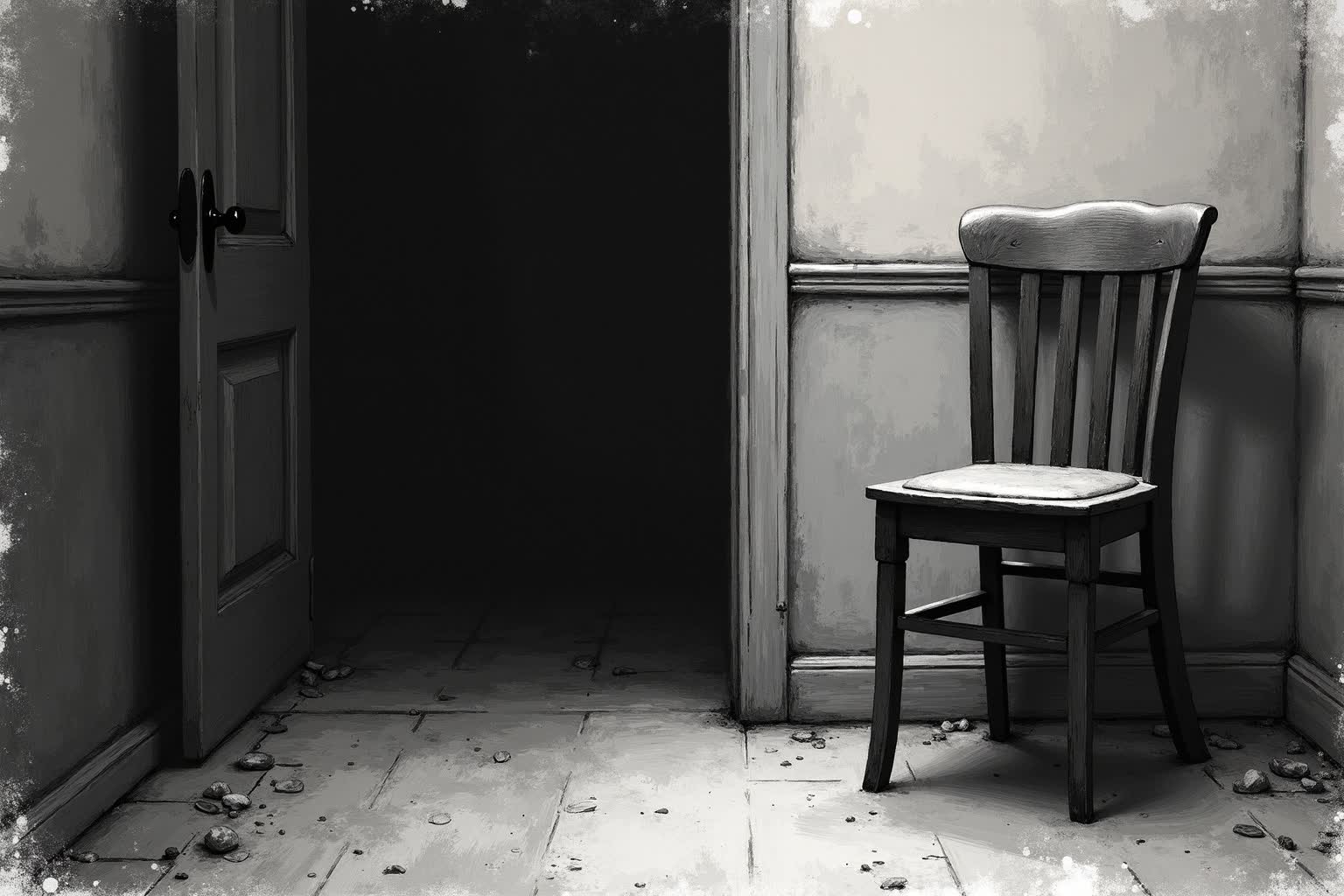
Kept the chair at the table metaphorically reserved for someone who had already left the restaurant.
A job that told me no fourteen times in eleven months.
Each no a clear signal.
Each signal met by the model that said this is where I belong and the model did not ask me whether it should update.
It held itself in place with a confidence that borrowed nothing from the evidence.
I thought I was being persistent.
The word for what I was being is expensive.
Every week the model ran against incoming data it cost something.
Not psychologically.
Not in the soft sense that people use the word cost.
Physiologically.
The same way a muscle held against gravity costs glucose.
The same way a fist clenched for hours costs the forearm.
I was clenching against what was already true and calling the clenching dedication.
Here is what is underneath.
The brain maintains a prediction about what is.
When reality contradicts the prediction, an error signal fires.
There are two responses.
Update the model to match the world.
Or act on the world to match the model.
When the world cannot be changed, when the thing is settled, when the evidence is standing in front of you saying I am not going to be here next year, there is only one response that resolves the error.
Update.
Resistance is the refusal to update.
Not because the person is weak or afraid or in denial in the folk sense.
Because the prediction carries high precision.
High precision means the brain trusts its own model more than it trusts the incoming evidence.
Fourteen years of confirmed marriage generates a model whose precision is a nine out of ten.
One sentence on one Tuesday arrives with a precision of two.
The system does the math.
The math says: suppress the error.
Maintain the model.
The evidence is probably noise.
Except it is not noise.
It is the clearest signal that will ever arrive.
And the system cannot tell the difference between noise and signal when the prior is that strong.
This is not a flaw.
This is how prediction works.
And the person standing inside the prediction, watching the windows go in, is not deluded.
They are trapped in the gap between what the system trusts and what is true.
Let it go.
The instruction that launched an industry of three word solutions aimed at a problem that lives at the level of precision weighting in the predictive hierarchy.
The radical acceptance workshop.
Four hundred dollars for a weekend in a hotel conference room where a facilitator with a PhD reads you the definition of acceptance and asks you to practice it on the thing that is eating you alive.
Practice it.
As if acceptance were a skill you rehearse.
As if the system that has been maintaining a falsified prediction for three years will stop because you sat cross legged and said I accept three times before lunch.
The Kubler Ross stages printed on a laminated card in every grief counselor’s office as if they were stairs you climb rather than dynamics that occur.
As if reaching the fifth stage were a matter of climbing diligently through the first four.
As if the system can be walked to its own collapse by a motivated hiker with a laminated card.
The letting go journal.
Forty two dollars.
Gold letters on a linen cover.
Write what you are releasing today.
The writing is the system generating a new prediction: I will be a person who has let go.
The prediction arrives tomorrow.
You are not that person.
Error signal fires.
Now you are resisting the resistance.
A third arrow.
The therapist who looks across the leather chair and says you need to accept what happened.
She is describing the end state of a process that cannot be initiated on command.
She is pointing to the far shore from a boat that has no rudder.
She is naming the destination and calling it a direction.
Acceptance cannot be a goal because the moment you make it a goal you have created a new prediction that reality can violate.
I will be accepting.
I am not yet accepting.
The gap between these two is another war.
Another cost.
Another fist held against another truth.
The industry sells the instruction.
Nobody sells the mechanism.
Because the mechanism says acceptance is a subtraction, not an addition.
Not: add letting go to your morning routine.
But: stop spending the energy that holds the falsified model in place.
And you cannot sell the absence of effort.
You cannot charge four hundred dollars for stop doing the thing.
So the instruction persists.
Let go. Let go. Let go.
Aimed at a system that only lets go when it cannot afford to hold anymore.
He signed the papers in May of the following year.
Seventeen months after she said it at the kitchen table.
The addition was finished.
New room. New windows. Hardwood floors she had picked from a catalogue two years before the sentence that ended everything.
She never spent a night in it.
He did not sign because he decided to accept.
He signed because the metabolic cost of maintaining the model exceeded what his system could sustain.
Insomnia for nine months.
Fourteen pounds lost to a body running a war it could not name.
A performance review at work that used the word distracted four times.
The system ran out of budget.
The precision dropped.
The evidence flooded in.
And the model collapsed to match what had been true since March of the year before.
He did not accept.
Acceptance happened to him.
The way a held breath eventually forces an inhale.
Not because you decide to breathe.
Because the system that holds you together cannot hold you together and hold the breath at the same time.
Something gives.
The thing that gives is always the thing being held against reality.
Because reality does not have a budget.
And you do.
I still do this.
Not with a marriage.
Not with an addition going up in the yard.
Smaller holdings.
A version of a friendship that ended two conversations ago.
A version of a career that the evidence contradicted last quarter.
A version of my body that reality corrects every morning and the model re predicts every night.
I know the mechanism.
I know that resistance is a metabolic war against incoming evidence.
I know that acceptance is not a thing I do but a thing that happens when I stop doing.
I know that every moment I maintain the falsified model I am paying with the same fuel I need for everything else.
And the knowing has not yet been enough to make the system release.
Because knowing is not the variable.
Precision is.
And precision does not answer to knowing.
It answers to cost.
When the cost of holding exceeds the cost of updating, the model falls.
Not before.
Not because you are wise or ready or healed.
Because you are broke.
That is where I stand.
Holding three or four predictions the world has already killed.
Knowing the holding costs something specific.
Watching the budget decline.
Waiting for the arithmetic to finish without being able to do the arithmetic faster.
The room is built.
The person it was built for is not coming.
And I am still, some mornings, standing in the doorway as if the standing might change the math.
These are words. The mechanism they describe is not words. You will have to look for yourself.