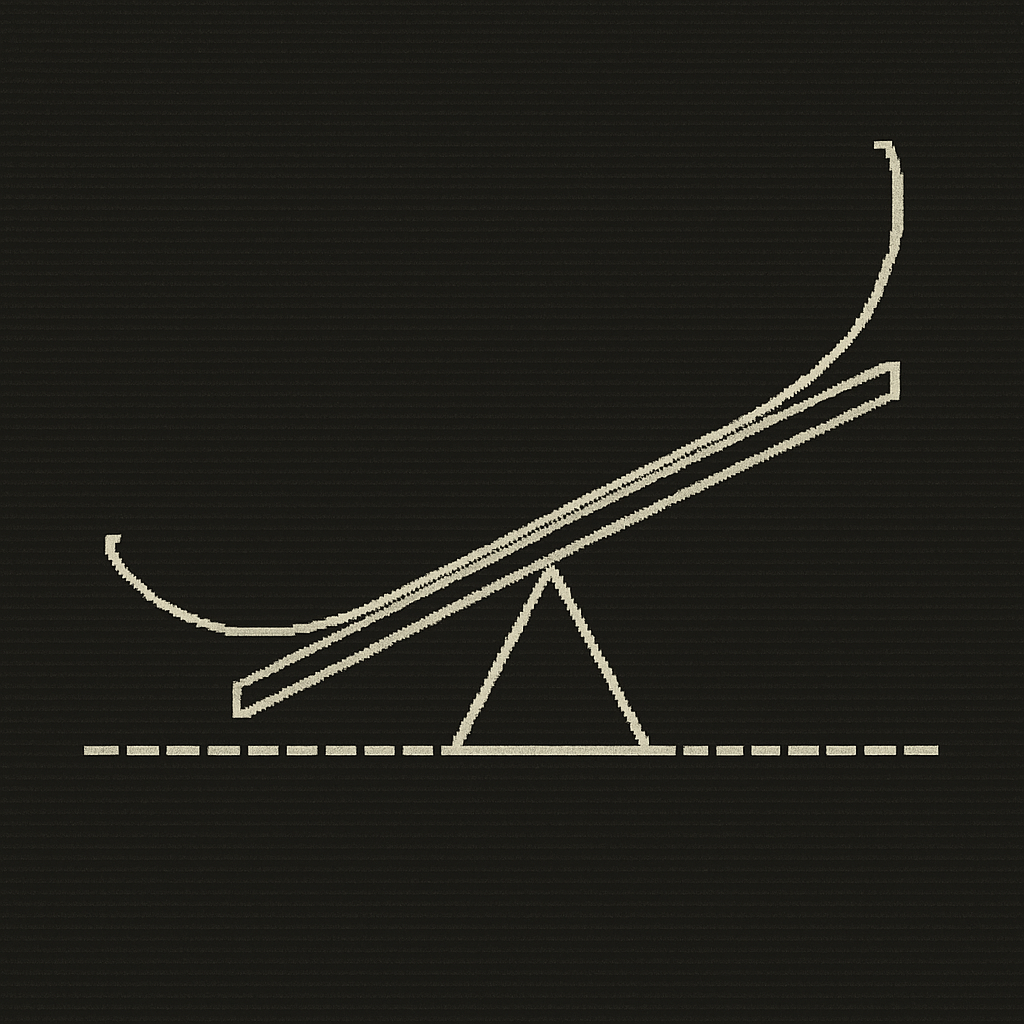
THE MACHINERY OF VARIANCE
A Complete Guide to How Variability Actually Works
Why Most Operators Get the Wrong Answer to the Wrong Question
What follows is not advice.
It is not a quality management framework. Not six steps to reduce variability. Not a risk management checklist. Not a defense of chaos dressed up as strategy.
It is mechanism.
The actual machinery that determines when variance destroys value and when it creates it. The structural properties of payoff functions that decide, before the first process is ever measured, whether variability is poison or fuel. The mathematics that most operators never learn, and the perceptual biases that ensure they misread the mathematics even when they do.
Most operators have a single relationship with variance. They want less of it. Consistency is good. Predictability is good. Deviation is bad. This intuition is correct roughly half the time. The other half, it is the most expensive mistake the operator will make. The difference between the two halves is not judgment or experience. It is geometry.
This document describes that geometry.
What the operator reading it does next is their business.
PART ONE: THE WRONG QUESTION
The Question Most Operators Ask
Is variance good or bad?
This is the wrong question. It is like asking whether speed is good or bad. Speed toward a cliff is catastrophic. Speed toward the destination is the point. The speed did not change. The direction changed.
Variance operates identically.
The same degree of variability, applied to two different payoff structures, produces opposite outcomes. In one structure it destroys value with every fluctuation. In the other it creates value with every fluctuation. The variability is identical. The structure underneath it is not.
The right question is not “how much variance do I have?”
The right question is “what shape is my payoff function?”
The Two Shapes
Every business process, every strategic bet, every operational system has a payoff function. The payoff function maps outcomes to value. It describes what happens to the operator when reality deviates from the mean.
There are two fundamental shapes.
    THE TWO PAYOFF SHAPES

    CONCAVE (variance destroys value)

    Value
         │
         │  ████████
    HIGH │  ████████████
         │  ████████████████
         │  ████████████████████
    MED  │  ████████████████████████
         │  ████████████████████████████
         │  ████████████████████████████████
    LOW  │  ████████████████████████████████████
         │
         └──────────────────────────────────────────►
              ◄── worse    OUTCOME    better ──►


    CONVEX (variance creates value)

    Value
         │
         │                          ████████████████
    HIGH │                      ████████████████
         │                  ████████████████
         │              ████████████████
    MED  │          ████████████████
         │      ████████████████
         │  ████████████████
    LOW  │  ████████████
         │
         └──────────────────────────────────────────►
              ◄── worse    OUTCOME    better ──►
Concave payoffs: the downside of a bad outcome is larger than the upside of an equally good outcome. A restaurant kitchen is concave. A perfect dish is expected. A terrible dish loses the customer forever. The upside of overperformance is small. The downside of underperformance is enormous.
Convex payoffs: the upside of a good outcome is larger than the downside of an equally bad outcome. A venture portfolio is convex. Most bets return zero. One bet returns 100x. The downside of each failure is bounded. The upside of each success is unbounded.
Same variance. Opposite consequences.
The operator who reduces variance in a concave system is doing the right thing. The operator who reduces variance in a convex system is destroying the mechanism that creates value.
PART TWO: THE TWO TYPES
Deming’s Central Insight
W. Edwards Deming spent five decades teaching a single idea. Most managers never understood it. The idea: there are two fundamentally different types of variation, and confusing them is the most expensive mistake in management.
Common cause variation is inherent in the system. It is the normal fluctuation that any process produces when operating as designed. A kitchen that consistently produces dishes within a two-minute window of the target ticket time has common cause variation. The variation is built into the process. It is the process.
Special cause variation is external to the system. It is a signal that something specific happened. A new cook who does not know the recipe. A broken refrigerator that spoiled the protein. A supplier who shipped the wrong product. These are not the system fluctuating. These are disruptions to the system.
    DEMING'S TWO TYPES OF VARIATION

    ┌──────────────────────────────────────────────────────┐
    │                                                      │
    │                  COMMON CAUSE                        │
    │                                                      │
    │    Source:    The system itself                       │
    │    Pattern:   Random, within bounds                  │
    │    Fix:       Redesign the system                    │
    │    Mistake:   Tampering with individual events       │
    │                                                      │
    │    "The noise that is the system"                    │
    │                                                      │
    └──────────────────────────────────────────────────────┘

    ┌──────────────────────────────────────────────────────┐
    │                                                      │
    │                  SPECIAL CAUSE                       │
    │                                                      │
    │    Source:    External disruption                     │
    │    Pattern:   Non-random, identifiable               │
    │    Fix:       Find and remove the specific cause     │
    │    Mistake:   Redesigning the whole system           │
    │                                                      │
    │    "The signal that something broke"                 │
    │                                                      │
    └──────────────────────────────────────────────────────┘
The two mistakes are symmetric and equally destructive.
Mistake 1: Treating common cause as special cause. An operator sees a slow ticket time on Tuesday and blames the line cook. The cook was not the problem. The process was the problem. The operator tampered. They moved one variable without understanding the system. This makes the system worse.
Mistake 2: Treating special cause as common cause. An operator sees food cost spike for three weeks and assumes it is normal fluctuation. It is not. A supplier quietly changed the product spec. By the time the operator investigates, three weeks of margin have evaporated.
Deming called this confusion “the most important problem in management.”
He was not exaggerating.
The Tampering Effect
When an operator treats random noise as meaningful signal, they intervene. Each intervention adds a new source of variation to the system. The process gets noisier. The operator sees more noise. They intervene again. The system degrades further.
Deming called this the funnel experiment. He demonstrated it with a physical funnel and a marble. When you adjust the funnel after every drop, trying to correct each error, the pattern of drops gets progressively worse.
    THE TAMPERING SPIRAL

    System produces           Operator sees
    normal variation    →     deviation from target
         │                           │
         │                           ▼
         │                    Operator adjusts
         │                    the process
         │                           │
         │                           ▼
         │                    Adjustment adds
         │                    new variation
         │                           │
         └───────────────────────────┘
                    │
                    ▼
         Total variation increases
         Operator intervenes more
         System degrades further
The operator who intervenes in common cause variation is not reducing variance. They are producing it. Every adjustment that does not address the system design is a new random input. The process was stable. Now it is unstable. The operator made it worse by trying to make it better.
This is not a failure of effort. It is a failure of classification. The operator asked “what went wrong?” when the right question was “is this within the normal range of the system?”
PART THREE: THE VARIANCE TAX
The Kingman Equation
In 1961, John Kingman published a formula that should be required reading for every operator who runs a process. It describes the relationship between variability, utilization, and waiting time.
The formula is known as the VUT equation.
Waiting Time = V x U x T
Where V is the variability factor, U is the utilization factor (which equals u / (1 - u), where u is utilization), and T is the mean processing time.
The formula says something that most operators feel but cannot articulate: as you push a system closer to full capacity, variance becomes catastrophically expensive.
    THE KINGMAN CURVE

    Waiting
    Time
         │
         │                                          │
         │                                        ██│
    HIGH │                                      ████│
         │                                    ██████│
         │                                  ████████│
         │                                ██████████│
         │                              ████████████│
    MED  │                          ████████████████│
         │                      ████████████████████│
         │                ██████████████████████████│
    LOW  │  ████████████████████████████████████████│
         │                                          │
         └──────────────────────────────────────────►
           50%      70%      85%    95%   100%
                    UTILIZATION

    At 85% utilization, doubling variance
    roughly doubles wait time.

    At 95% utilization, doubling variance
    roughly quadruples wait time.
At 50% utilization, variance is nearly free. The system has enough slack to absorb fluctuations without anyone waiting.
At 85% utilization, variance starts to bite. Wait times climb. Queues form. Customers notice.
At 95% utilization, variance becomes explosive. Small increases in variability produce enormous increases in waiting. The system is not failing because it is slow. It is failing because it has no room to absorb the inevitable fluctuations.
This is why the kitchen that runs at 95% capacity during a Friday rush falls apart when two orders come in simultaneously, while the same kitchen at 70% capacity handles the same spike without breaking a sweat. The capacity did not change. The variance tax changed.
The Three Currencies
Factory physics establishes a law that no operator escapes.
Variability is always buffered. Always. The question is not whether you buffer it but how. There are exactly three currencies with which variance can be paid.
    THE THREE VARIANCE BUFFERS

    ┌──────────────────┐  ┌──────────────────┐  ┌──────────────────┐
    │                  │  │                  │  │                  │
    │    INVENTORY     │  │    CAPACITY      │  │      TIME        │
    │                  │  │                  │  │                  │
    │  Extra stock     │  │  Extra machines  │  │  Longer lead     │
    │  Extra prep      │  │  Extra staff     │  │  times           │
    │  Extra product   │  │  Extra space     │  │  Slower delivery │
    │                  │  │                  │  │                  │
    │  Cost: capital   │  │  Cost: fixed     │  │  Cost: customer  │
    │  tied up in      │  │  overhead when   │  │  patience and    │
    │  material        │  │  underutilized   │  │  satisfaction    │
    │                  │  │                  │  │                  │
    └──────────────────┘  └──────────────────┘  └──────────────────┘

         You choose which currency to pay in.
         You do not choose whether to pay.
The ghost kitchen that preps extra protein pays in inventory. The restaurant that schedules an extra cook on Friday pays in capacity. The delivery service that quotes 45 minutes instead of 30 pays in time.
All three are paying the same bill. The bill is variance.
The operator who refuses to pay in any of the three currencies is not saving money. They are paying in a fourth currency: chaos. Missed orders. Angry customers. Burned-out staff. Broken equipment run past tolerance.
Chaos is the most expensive currency. But it does not appear on the P&L until the damage is done.
PART FOUR: THE CONVEXITY TEST
Taleb’s Framework
Nassim Taleb formalized the relationship between variance and value in a single observation. If your payoff function is convex, you benefit from variance. If your payoff function is concave, you are harmed by variance. If your payoff function is linear, variance is neutral.
This is not opinion. It is Jensen’s inequality. A mathematical theorem published in 1906.
For any convex function f, the expected value of f(x) is greater than or equal to f(the expected value of x). More variance in x means more value from the convexity.
For any concave function f, the relationship reverses. More variance means less value.
    JENSEN'S INEQUALITY IN OPERATIONS

    ┌──────────────────────────────────────────────────────┐
    │                                                      │
    │  CONCAVE SYSTEM (operations, fulfillment, quality)   │
    │                                                      │
    │  Average of outcomes < Outcome of averages           │
    │                                                      │
    │  A kitchen that is brilliant half the time and        │
    │  terrible half the time performs WORSE than a         │
    │  kitchen that is consistently adequate.               │
    │                                                      │
    │  Variance destroys.                                  │
    │                                                      │
    └──────────────────────────────────────────────────────┘

    ┌──────────────────────────────────────────────────────┐
    │                                                      │
    │  CONVEX SYSTEM (bets, experiments, search)           │
    │                                                      │
    │  Average of outcomes > Outcome of averages           │
    │                                                      │
    │  A portfolio of ten wild experiments where nine      │
    │  fail and one succeeds performs BETTER than ten      │
    │  moderate experiments that all return average.        │
    │                                                      │
    │  Variance creates.                                   │
    │                                                      │
    └──────────────────────────────────────────────────────┘
The practical test is simple.
Ask: if I doubled the spread of outcomes while keeping the average the same, would I be better off or worse off?
If worse off: the system is concave. Reduce variance.
If better off: the system is convex. Increase variance.
If neutral: the system is linear. Variance does not matter. Manage something else.
The Operator’s Map
Most businesses contain all three shapes simultaneously. The error is applying one variance policy to the entire organization.
    VARIANCE POSTURE BY FUNCTION

    ┌────────────────────────────────────────────────────────┐
    │                                                        │
    │  REDUCE VARIANCE           INCREASE VARIANCE           │
    │  (concave domains)         (convex domains)            │
    │                                                        │
    │  ■ Fulfillment             ■ Product experiments       │
    │  ■ Quality control         ■ Market entry bets         │
    │  ■ Customer experience     ■ Hiring for outliers       │
    │  ■ Financial reporting     ■ Channel testing           │
    │  ■ Compliance              ■ Pricing experiments       │
    │  ■ Supply chain            ■ Partnership exploration   │
    │  ■ Safety protocols        ■ Business model search     │
    │                                                        │
    │  KEEP VARIANCE CONSTANT                                │
    │  (linear domains)                                      │
    │                                                        │
    │  ■ Routine procurement                                 │
    │  ■ Standard communication                              │
    │  ■ Administrative processes                            │
    │                                                        │
    └────────────────────────────────────────────────────────┘
The operator who demands consistency from the R&D team is applying the operations playbook where the exploration playbook belongs. The operator who tolerates inconsistency in the kitchen is applying the exploration playbook where the operations playbook belongs.
Both are making the same structural error. They are applying the wrong variance policy to the wrong payoff shape.
PART FIVE: THE PERCEPTION DISTORTION
Loss Aversion and Variance
Daniel Kahneman and Amos Tversky demonstrated in 1979 that humans perceive losses approximately twice as painfully as equivalent gains. A $100 loss feels roughly as bad as a $200 gain feels good.
This creates a systematic bias in how operators perceive variance.
A process that fluctuates between +10% and -10% around the target is symmetrical in reality. It is asymmetrical in the operator’s experience. The -10% days feel twice as painful as the +10% days feel good. The operator’s average experience of the process is negative, even though the process average is exactly on target.
    THE LOSS AVERSION DISTORTION

    REALITY:
                     ┌──────────┐
    +10%  ████████████          │
                     │  TARGET  │
    -10%  ████████████          │
                     └──────────┘
          Symmetric. Average = target.


    OPERATOR EXPERIENCE:
                     ┌──────────┐
    +10%  ██████     │          │  Feels like +5
                     │  TARGET  │
    -10%  ████████████████████  │  Feels like -20
                     └──────────┘
          Asymmetric. Average feels negative.
This is why operators over-invest in variance reduction even when the process is performing within spec. The process feels broken because the bad days weigh more heavily than the good days. The data says the process is fine. The operator’s nervous system says it is not.
The Certainty Premium
Kahneman and Tversky also showed that people overvalue certainty. A guaranteed outcome is perceived as disproportionately valuable relative to a probable one, even when the expected value of the probable outcome is higher.
Applied to operations: an operator will often choose a guaranteed lower return over a probable higher return, simply because the guaranteed return eliminates variance.
This is rational in concave domains. A kitchen that guarantees adequate is worth more than a kitchen that is usually brilliant and occasionally terrible.
It is irrational in convex domains. A product portfolio that guarantees mediocre returns is worth less than a portfolio that occasionally produces a breakthrough and usually produces nothing.
The bias does not distinguish between the two domains. It applies uniformly. The result is that operators systematically over-reduce variance in convex domains and get approximately the right level in concave domains. The net effect is captured opportunity on the operations side and destroyed opportunity on the exploration side.
PART SIX: THE POWER LAW PROBLEM
Outcomes Are Not Normal
The deepest structural error in how operators think about variance is the assumption that outcomes follow a bell curve.
They do not.
In most business contexts, outcomes follow power law distributions. A small number of events produce the majority of results. The distribution has a long tail. The extreme values are not outliers to be excluded. They are the results that matter.
    NORMAL VS POWER LAW DISTRIBUTIONS

    NORMAL (bell curve):

    Frequency
         │
         │          ████████
         │       ███████████████
         │     ██████████████████
         │   ███████████████████████
         │  █████████████████████████
         │ ████████████████████████████
         │██████████████████████████████
         └──────────────────────────────────►
                     OUTCOME
         Most outcomes cluster near the mean.
         Extremes are rare and symmetric.


    POWER LAW:

    Frequency
         │
         │█
         │██
         │████
         │███████
         │████████████
         │████████████████████
         │███████████████████████████████████
         └──────────────────────────────────────►
                     OUTCOME
         Most outcomes are small.
         A few outcomes are enormous.
         The tail IS the story.
Research on employee performance demonstrates this. In complex roles, top performers produce 400 to 500 percent more output than the average performer. The distribution is not normal. It is a power law. The tail is not noise. The tail is where the value lives.
Peter Thiel articulated the venture capital version: the best investment in a successful fund equals or outperforms the entire rest of the fund combined. The distribution of returns is so skewed that the mean is meaningless. The median venture investment returns zero. The mean, pulled upward by the tail, suggests the asset class is attractive. The median says it is a graveyard.
What Power Laws Mean for Variance Management
If outcomes are normally distributed, reducing variance around the mean is sensible. The mean is representative. Outliers are noise. Consistency matters.
If outcomes are power-law distributed, reducing variance around the mean destroys the mechanism that generates value. The mean is not representative. Outliers are the point. Consistency kills.
    THE DISTRIBUTION DETERMINES THE STRATEGY

    ┌────────────────────────────┐  ┌────────────────────────────┐
    │                            │  │                            │
    │   NORMAL DISTRIBUTION      │  │   POWER LAW DISTRIBUTION   │
    │                            │  │                            │
    │   Mean is informative      │  │   Mean is misleading       │
    │   Extremes are noise       │  │   Extremes are signal      │
    │   Reduce variance          │  │   Maximize exposure to     │
    │   Optimize the average     │  │     the right tail         │
    │   Consistency wins         │  │   Optionality wins         │
    │                            │  │                            │
    │   Operations playbook      │  │   Exploration playbook     │
    │                            │  │                            │
    └────────────────────────────┘  └────────────────────────────┘
The operator who applies normal-distribution thinking to a power-law domain is playing a game that cannot be won by the strategy they have chosen. They are optimizing the average in a world where the average does not exist in any meaningful sense.
PART SEVEN: THE PORTFOLIO EFFECT
Markowitz’s Insight
In 1952, Harry Markowitz published a paper that won him the Nobel Prize. The insight was deceptively simple.
The variance of a portfolio is not the average of the variances of its components.
It depends on how the components move together.
Two assets that are individually volatile but move in opposite directions produce a portfolio that is stable. Two assets that are individually stable but move in lockstep produce a portfolio that is fragile. The individual variance is not the point. The correlation structure is the point.
    THE CORRELATION EFFECT

    TWO ASSETS, SAME INDIVIDUAL VARIANCE

    Positively correlated (move together):
    ┌──────────────────────────────────────────────────┐
    │                                                  │
    │  Asset A:  ████  ████████  ████  ████████  ████  │
    │  Asset B:  ███   ███████   ███   ███████   ███   │
    │                                                  │
    │  Portfolio: ████  ████████  ████  ████████  ████  │
    │                                                  │
    │  Combined variance: HIGH (risks compound)        │
    │                                                  │
    └──────────────────────────────────────────────────┘

    Negatively correlated (move opposite):
    ┌──────────────────────────────────────────────────┐
    │                                                  │
    │  Asset A:  ████  ████████  ████  ████████  ████  │
    │  Asset B:  ███████   ███   ███████   ███   ████  │
    │                                                  │
    │  Portfolio: █████  █████  █████  █████  █████     │
    │                                                  │
    │  Combined variance: LOW (risks cancel)           │
    │                                                  │
    └──────────────────────────────────────────────────┘
Applied to business: an operator running three locations in the same city, serving the same cuisine, to the same demographic, has a positively correlated portfolio. When one location struggles, they all struggle. The diversification is cosmetic.
An operator running three different concepts, in different neighborhoods, serving different price points, has a negatively correlated portfolio. When casual dining drops, the fast-casual concept may hold. The diversification is real.
The Independence Premium
The most valuable portfolio property is not negative correlation. It is independence. Components that fluctuate for unrelated reasons.
Revenue from corporate catering and revenue from weekend brunch operate on different drivers. A recession that kills corporate budgets may not touch weekend brunch. A neighborhood construction project that kills foot traffic does not touch catering delivery routes.
    VARIANCE REDUCTION THROUGH INDEPENDENCE

    Single revenue stream:
    Variance = σ²

    Two independent streams of equal size:
    Variance = σ²/2

    Four independent streams of equal size:
    Variance = σ²/4

    n independent streams of equal size:
    Variance = σ²/n

    ┌──────────────────────────────────────────────────────┐
    │                                                      │
    │   The variance of the whole shrinks as 1/n           │
    │   BUT ONLY IF the streams are independent            │
    │                                                      │
    │   Correlated streams do not reduce variance.         │
    │   Adding a fourth location identical to the          │
    │   other three adds revenue without reducing risk.    │
    │                                                      │
    └──────────────────────────────────────────────────────┘
Diversification is not about having more things. It is about having things that fail for different reasons. An operator with ten revenue streams that all depend on the same platform has one source of variance dressed in ten costumes. An operator with three revenue streams that depend on different drivers has real diversification with a third the complexity.
PART EIGHT: THE BARBELL
Architecture for Beneficial Variance
Taleb’s barbell strategy is the structural answer to the variance question. It separates the organization into two zones with radically different variance policies.
Zone 1: The core. Concave payoffs. Reduce variance to the minimum. Standardize. Systemize. Make the predictable things perfectly predictable. This is operations. This is fulfillment. This is the machine that runs every day. Protect it from volatility.
Zone 2: The edge. Convex payoffs. Maximize variance. Run small experiments with bounded downside and unbounded upside. This is exploration. This is the search for the next thing. Expose it to volatility.
The middle: Avoid. Moderate risk, moderate return, moderate everything. The middle produces the worst of both worlds. Too much variance for the concave payoffs to survive. Too little variance for the convex payoffs to pay off. The middle is where margin goes to die.
    THE BARBELL ARCHITECTURE

    ◄───────────────────────────────────────────────────────►

    ZONE 1: CORE                                 ZONE 2: EDGE
    85-90% of resources                          10-15% of resources

    ┌─────────────────────┐                 ┌─────────────────────┐
    │                     │                 │                     │
    │  MINIMIZE VARIANCE  │                 │  MAXIMIZE VARIANCE  │
    │                     │                 │                     │
    │  ■ Standardized     │                 │  ■ Many small bets  │
    │    processes        │       ✕         │  ■ Bounded downside │
    │  ■ Tight controls   │                 │  ■ Unbounded upside │
    │  ■ Predictable      │    NOTHING      │  ■ Fast kill/scale  │
    │    outcomes         │   IN THE        │    decisions        │
    │  ■ Low risk         │   MIDDLE        │  ■ High risk        │
    │  ■ Steady returns   │                 │  ■ Convex returns   │
    │                     │                 │                     │
    └─────────────────────┘                 └─────────────────────┘

    The core pays for the edge.
    The edge finds the next core.
    The middle does neither.
The discipline is the separation. The core funds the experiments. The experiments find the next business. When an experiment works, it migrates to the core and gets the core’s variance policy. When it does not work, it dies quickly and cheaply.
The failure mode is contamination. When the core’s variance leaks into the experiments (demanding predictability from exploration). Or when the edge’s variance leaks into the core (tolerating inconsistency in operations). The barbell works because the two zones have opposite variance policies applied with complete discipline.
PART NINE: THE MEASUREMENT TRAP
Averages Destroy Information
The most common way operators encounter variance is through averages. Average ticket time. Average food cost. Average revenue per location. Average customer satisfaction.
Averages are concave functions. They destroy information about the distribution. Two processes can have identical averages and completely different variance profiles. The average hides the thing that matters.
    THE AVERAGING PROBLEM

    KITCHEN A:
    Ticket times: 12, 13, 12, 14, 13, 12, 13, 14, 12, 13
    Average: 12.8 minutes
    Range: 12-14 minutes

    KITCHEN B:
    Ticket times: 8, 18, 10, 16, 9, 17, 11, 15, 12, 12
    Average: 12.8 minutes
    Range: 8-18 minutes

    ┌──────────────────────────────────────────────────────┐
    │                                                      │
    │   Same average.                                      │
    │   Completely different operations.                    │
    │                                                      │
    │   Kitchen A is a machine.                            │
    │   Kitchen B is a lottery.                            │
    │                                                      │
    │   The average cannot tell them apart.                │
    │                                                      │
    └──────────────────────────────────────────────────────┘
The operator who manages by averages is blind to variance. The dashboard shows the mean. It does not show the shape of the distribution around the mean. It does not show whether the process is a machine or a lottery.
The Metrics That Matter
Three numbers capture variance more usefully than the average alone.
Standard deviation measures the typical distance from the mean. A process with a mean of 12 minutes and a standard deviation of 1 minute is tight. A process with the same mean and a standard deviation of 5 minutes is loose.
Coefficient of variation (CV) normalizes the standard deviation by dividing it by the mean. This allows comparison across different scales. A CV below 0.2 (20%) generally indicates a controlled process. A CV above 0.5 (50%) indicates a process that is not under statistical control.
The tail: what happens at the extremes. The worst 5% of outcomes. The best 5%. This is where the customer experience is made or destroyed. A process with a tight average but a fat left tail (occasional catastrophic failures) will damage reputation despite looking good on the dashboard.
    THE THREE VARIANCE METRICS

    ┌──────────────────┐  ┌──────────────────┐  ┌──────────────────┐
    │                  │  │                  │  │                  │
    │    STANDARD      │  │   COEFFICIENT    │  │      TAIL        │
    │    DEVIATION     │  │   OF VARIATION   │  │    BEHAVIOR      │
    │                  │  │                  │  │                  │
    │  How far from    │  │  SD / mean       │  │  What happens    │
    │  the mean        │  │                  │  │  at the          │
    │  things          │  │  Allows cross-   │  │  extremes        │
    │  typically       │  │  process         │  │                  │
    │  fall            │  │  comparison      │  │  Where           │
    │                  │  │                  │  │  reputation      │
    │                  │  │                  │  │  is made         │
    │                  │  │                  │  │                  │
    └──────────────────┘  └──────────────────┘  └──────────────────┘
The operator who reports the average plus these three numbers sees the process. The operator who reports the average alone sees a fiction.
PART TEN: THE VARIANCE BUDGET
Every System Has a Tolerance
Every process, every operation, every customer relationship has a variance budget. The budget is the total amount of variability the system can absorb before it breaks.
The budget is not infinite. And it is not allocated evenly.
Some dimensions have large budgets. The customer does not care if the delivery arrives at 6:42 or 6:47. Five minutes of variance in arrival time costs nothing.
Some dimensions have zero budget. The customer cares intensely whether the order is correct. One wrong item costs the next three orders.
    VARIANCE BUDGET BY DIMENSION

    ┌────────────────────────────────────────────────────────┐
    │                                                        │
    │    DIMENSION           BUDGET        COST OF OVERRUN   │
    │                                                        │
    │    Order accuracy      Zero          Customer lost     │
    │    Food temperature    Very small    Refund + review   │
    │    Delivery time       Moderate      Complaint         │
    │    Packaging           Moderate      Mild annoyance    │
    │    Driver politeness   Large         Barely noticed    │
    │                                                        │
    │    The budget is NOT the operator's preference.        │
    │    It is the CUSTOMER'S tolerance threshold.           │
    │                                                        │
    └────────────────────────────────────────────────────────┘
The operator who spends variance budget on the wrong dimension is wasting constraint. Eliminating all variance in delivery time (expensive, requires excess capacity) while tolerating variance in order accuracy (cheap to fix, devastating to ignore) is a misallocation of the variance budget.
The budget metaphor reveals the strategy: spend your variance reduction resources where the customer’s tolerance is lowest. Leave variance alone where the customer’s tolerance is high. Every dollar spent reducing variance in a high-tolerance dimension is a dollar not spent reducing variance in a zero-tolerance dimension.
The Compounding of Small Variances
Individual variances combine. A process with five steps, each contributing a small amount of variability, produces total variability that is larger than any single step. If the steps are independent, the variances add. If the steps are correlated, the variances multiply.
    VARIANCE ACCUMULATION

    Step 1:  σ₁² ─────┐
    Step 2:  σ₂² ─────┤
    Step 3:  σ₃² ─────┼────► Total σ² = σ₁² + σ₂² + σ₃² + σ₄² + σ₅²
    Step 4:  σ₄² ─────┤      (if independent)
    Step 5:  σ₅² ─────┘

    Five steps with CV = 0.10 each
    Total process CV ≈ 0.22

    Five steps with CV = 0.20 each
    Total process CV ≈ 0.45

    ┌──────────────────────────────────────────────────────┐
    │                                                      │
    │   Each step looks controlled.                        │
    │   The total process does not.                        │
    │                                                      │
    │   Variance compounds across steps.                   │
    │   The longest chain determines the weakest point.    │
    │                                                      │
    └──────────────────────────────────────────────────────┘
This is why complex processes break even when every individual step appears to be functioning correctly. The individual variances are within tolerance. The accumulated variance is not. The operator looking at each step in isolation sees no problem. The customer experiencing the end-to-end process sees chaos.
PART ELEVEN: OPERATOR NOTES
The patterns, synthesized for the operator who runs a real business.
Classify before you act. Before reducing or increasing variance in any process, determine the payoff shape. Operations and fulfillment are concave. Exploration and search are convex. Apply the right policy to the right domain. Most operators default to “reduce all variance” because concave domains are more visible and more emotionally salient.
Distinguish signal from noise. Deming’s two-type framework is the starting point. Track your metrics on a control chart. When a data point falls within the control limits, it is common cause. Do not investigate individual events. When a data point falls outside the control limits, it is special cause. Investigate immediately. The discipline is doing neither too early nor too late.
Measure the distribution, not the average. Add standard deviation and coefficient of variation to every operational metric you track. If you can only add one number, add the CV. A process with a stable average and a rising CV is a process heading toward failure. The average will be the last thing to move.
Know your utilization. The Kingman equation is not theoretical. It is a direct predictor of your operational reality. If you are running above 85% utilization in any process and experiencing quality problems, the variance tax is a more likely explanation than employee incompetence. Adding 15% slack to the system (capacity, inventory, or time) will often do more than any amount of training or discipline.
Allocate variance budget by customer tolerance. Map every dimension of customer experience to the customer’s actual tolerance threshold. Not your internal quality standard. The customer’s. Then spend variance reduction resources in order of ascending tolerance. Zero-tolerance dimensions first. High-tolerance dimensions last. Or never.
Build the barbell. Separate your organization into a core that runs with minimal variance and an edge that runs with maximal variance. Fund the edge from the core’s surplus. Do not blend the two. The discipline is institutional separation, not individual judgment.
Check the correlation structure. Before celebrating diversification, check whether your revenue streams, locations, or product lines actually move independently. If they all depend on the same platform, the same demographic, or the same economic cycle, you have cosmetic diversification. Real diversification requires genuine independence of failure modes.
The highest-leverage variance reduction is at the constraint. A process is a chain. Reducing variance at the bottleneck step has outsized impact on total system performance. Reducing variance at a non-bottleneck step has nearly zero impact. Identify the constraint first. Then reduce its variance. Then move to the next constraint.
PART TWELVE: THE COMPLETE PICTURE
The Unified Framework
Everything connects.
    THE COMPLETE VARIANCE FRAMEWORK

    ┌──────────────────────────────────────────────────────────┐
    │                                                          │
    │                     VARIANCE                             │
    │                                                          │
    │    The spread of outcomes around the expected value.      │
    │    Not inherently good or bad. Structurally determined.  │
    │                                                          │
    └──────────────────────────────────────────────────────────┘
                               │
               ┌───────────────┼───────────────┐
               │               │               │
               ▼               ▼               ▼
    ┌────────────────┐ ┌────────────────┐ ┌────────────────┐
    │                │ │                │ │                │
    │   CLASSIFY     │ │   MEASURE      │ │   POSITION     │
    │                │ │                │ │                │
    │  Common vs     │ │  SD, CV, tail  │ │  Concave vs    │
    │  special       │ │  behavior      │ │  convex        │
    │  cause         │ │  not averages  │ │  payoff        │
    │                │ │                │ │                │
    │  Deming        │ │  Statistical   │ │  Taleb         │
    │                │ │  process       │ │  Jensen's      │
    │                │ │  control       │ │  inequality    │
    │                │ │                │ │                │
    └────────────────┘ └────────────────┘ └────────────────┘
               │               │               │
               └───────────────┼───────────────┘
                               │
                               ▼
    ┌──────────────────────────────────────────────────────────┐
    │                                                          │
    │                    THE DECISION                          │
    │                                                          │
    │    Concave system → reduce variance (operations)         │
    │    Convex system  → increase variance (exploration)      │
    │    Linear system  → manage something else entirely       │
    │                                                          │
    │    The geometry decides. Not the operator's comfort.     │
    │                                                          │
    └──────────────────────────────────────────────────────────┘
Variance is not a number. It is a structural property of systems that interacts with the shape of the payoff function to produce or destroy value. The operator who understands this interaction has a map. The operator who does not is navigating by feeling, and feeling is systematically biased toward variance reduction by two hundred thousand years of loss aversion hardwired into the perceptual apparatus.
The machinery does not care about the operator’s preference. A concave system punishes variance regardless of whether the operator tolerates it. A convex system rewards variance regardless of whether the operator fears it. The payoff shape is physics. The operator’s comfort is psychology.
One of those yields to intervention. The other does not.
CITATIONS
Foundational Theory
Arrow Replacement Effect and Innovation Incentives
Arrow, K.J. (1962). “Economic Welfare and the Allocation of Resources for Invention.” In The Rate and Direction of Inventive Activity: Economic and Social Factors. Princeton University Press.
Deming on Variation
Deming, W.E. (1986). Out of the Crisis. MIT Press.
Deming, W.E. (1993). The New Economics for Industry, Government, Education. MIT Press.
LightsOnData. “Deming’s advice to busy executives: Reduce variation.” https://www.lightsondata.com/why-focus-reduce-variation/
Queuing Theory and Factory Physics
Kingman’s Formula
Kingman, J.F.C. (1961). “The single server queue in heavy traffic.” Mathematical Proceedings of the Cambridge Philosophical Society, 57(4):902-904.
Project Production Institute. “Kingman’s Equation (VUT equation).” https://projectproduction.org/glossary/kingmans-equation-vut-equation/
AllAboutLean.com. “The Kingman Formula: Variation, Utilization, and Lead Time.” https://www.allaboutlean.com/kingman-formula/
Factory Physics
Hopp, W.J. & Spearman, M.L. (2000). Factory Physics: Foundations of Manufacturing Management. McGraw-Hill.
Behavioral Economics
Prospect Theory
Kahneman, D. & Tversky, A. (1979). “Prospect Theory: An Analysis of Decision under Risk.” Econometrica, 47(2):263-292.
Simply Psychology. “Prospect Theory in Psychology: Loss Aversion Bias.” https://www.simplypsychology.org/prospect-theory.html
Convexity and Antifragility
Taleb’s Framework
Taleb, N.N. (2012). Antifragile: Things That Gain from Disorder. Random House.
Taleb, N.N. (2012). “Understanding is a Poor Substitute for Convexity (Antifragility).” Edge.org. https://www.edge.org/conversation/nassim_nicholas_taleb-understanding-is-a-poor-substitute-for-convexity-antifragility
FourWeekMBA. “Barbell Strategy 2026: Complete Guide to Taleb’s Approach.” https://fourweekmba.com/barbell-strategy-taleb/
Portfolio Theory
Markowitz
Markowitz, H. (1952). “Portfolio Selection.” The Journal of Finance, 7(1):77-91.
Wall Street Mojo. “Markowitz Model: What Is It, Assumptions, Diagram, Formula.” https://www.wallstreetmojo.com/markowitz-model/
Power Law Distributions
Venture Returns
Thiel, P. & Masters, B. (2014). Zero to One: Notes on Startups, or How to Build the Future. Crown Business.
AngelList. “What AngelList Data Says About Power-Law Returns in Venture Capital.” https://www.angellist.com/blog/what-angellist-data-says-about-power-law-returns-in-venture-capital
Performance Variance
Power Law in Performance
O’Boyle, E. & Aguinis, H. (2012). “The Best and the Rest: Revisiting the Norm of Normality of Individual Performance.” Personnel Psychology, 65(1):79-119.
Process Control and Six Sigma
Statistical Process Control
SixSigma.us. “Coefficient of Variation: Mastering Relative Variability in Statistics.” https://www.6sigma.us/six-sigma-in-focus/coefficient-of-variation/
Symestic. “Process Variation: The Heart of Six Sigma.” https://www.symestic.com/en-us/what-is/process-variations
Operations Variance
Performance Variability
MIT Sloan Management Review. “The Performance Variability Dilemma.” https://sloanreview.mit.edu/article/the-performance-variability-dilemma/
SA Coaching. “Variation and its impact on Productivity.” https://sacoachingcom.wordpress.com/2020/06/23/variation-and-its-impact-on-productivity/
Document compiled from comprehensive research across operations management, behavioral economics, queuing theory, portfolio mathematics, and applied strategy literature.