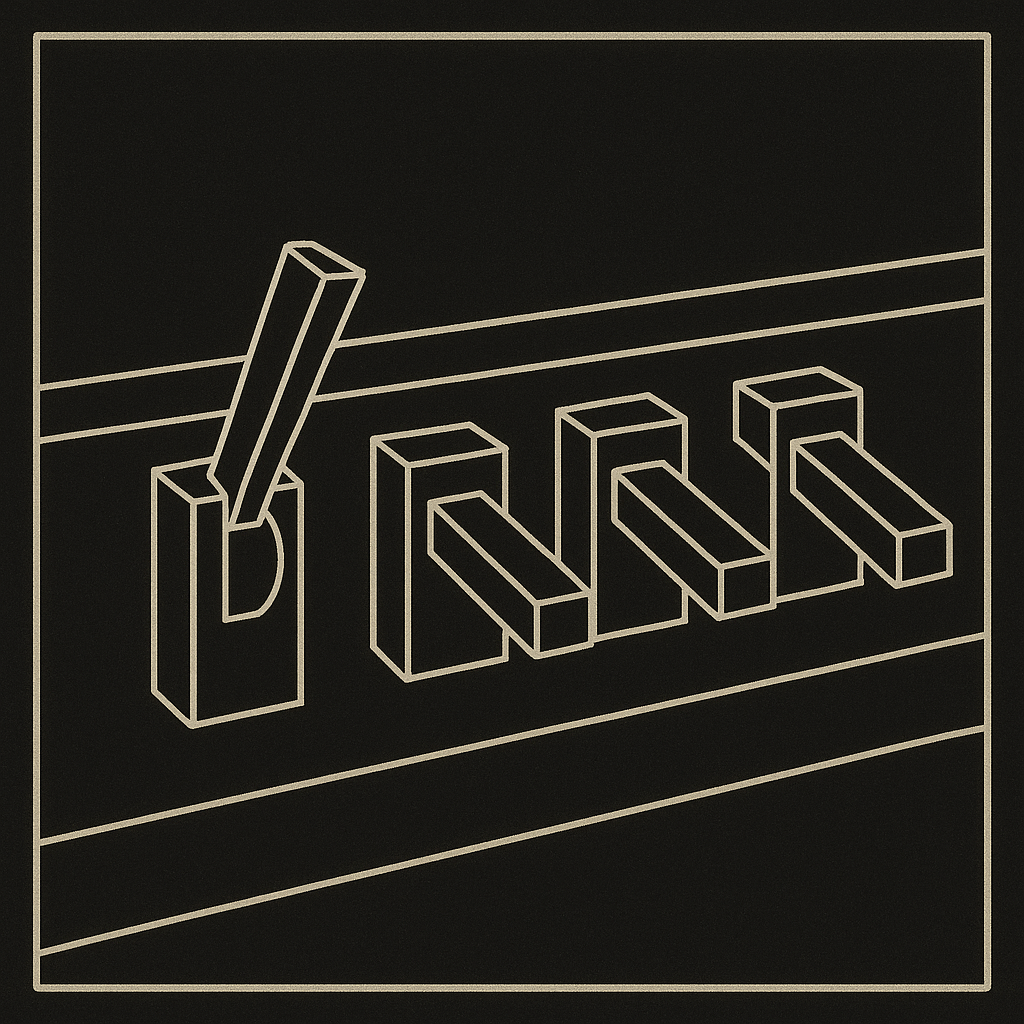
THE MACHINERY OF DEFAULTS
A Complete Guide to How the Pre-Set Choice Actually Governs
Why the Strongest Force in Any System Is the One Nobody Chose
What follows is not advice.
It is not a best practices list. Not a choice architecture playbook. Not seven ways to optimize your onboarding flow. Not a nudge framework dressed in behavioral economics clothing.
It is mechanism.
The actual machinery that determines why 95% of software users never change a single setting. Why organ donation rates vary by a factor of ten between countries with identical populations and identical medical infrastructure. Why 76% of employees in an automatic enrollment retirement plan stay at the default contribution rate for years, even when the rate is demonstrably too low for their stated goals. Why the meeting cadence nobody remembers scheduling still consumes four hundred hours of organizational capacity per quarter.
Most operators think about decisions. They analyze trade-offs. They debate options. They optimize the choices they make. None of this touches the machinery. The machinery sits one layer beneath the choice. It determines, before the choice is ever presented, which option wins when nobody chooses. And in most systems, most of the time, nobody chooses. The default runs. The default wins. The default compounds.
The gap between a mediocre operation and a high-performing one is not the quality of the decisions that get made. It is the quality of the outcomes that occur when no decision gets made at all.
This document is a description of that machinery.
What the operator reading it does next is their business.
PART ONE: THE REFRAME
Defaults Are Not Neutral
The word “default” points, in most operator minds, at a starting point. A placeholder. Something temporary that exists before the real decision happens. The factory setting on a phone. The pre-checked box on a form. The schedule inherited from last quarter.
This understanding is wrong in a specific and consequential way.
A default is not a starting point. A default is the finishing point for the majority of participants in any system.
Eric Johnson and Daniel Goldstein established this in a 2003 paper in Science titled “Do Defaults Save Lives?” They examined organ donation consent rates across European countries. The countries fell into two groups. Countries where citizens had to opt in to organ donation. Countries where citizens had to opt out of organ donation.
The medical systems were comparable. The populations were comparable. The cultural attitudes toward organ donation were comparable. In survey after survey, approximately 85% of citizens in both types of countries expressed approval of organ donation.
The rates diverged by an order of magnitude.
Opt-in countries produced effective consent rates between 4% and 27%. Opt-out countries produced consent rates between 86% and nearly 100%.
    THE DEFAULT DIVERGENCE

    ORGAN DONATION CONSENT RATES BY DEFAULT POLICY

    Opt-in countries:
    Denmark         ████                            4.25%
    Netherlands     ████████████████████████████    27.5%
    UK              ██████████████████              17.2%
    Germany         ████████████                    12.0%

    Opt-out countries:
    Austria         ██████████████████████████████████████████████████  99.98%
    France          ██████████████████████████████████████████████████  99.91%
    Hungary         ██████████████████████████████████████████████████  99.97%
    Belgium         ████████████████████████████████████████████████    98.0%
    Sweden          ██████████████████████████████████████████████      85.9%

    Same populations. Same attitudes. Same approval rates.
    Different default. Different outcome. By a factor of 10.
The citizens did not change. The mechanism changed. The default changed. And because most people, in most situations, do not override the default, the default became the outcome.
This is not a quirk of organ donation policy.
This is how every system with a default actually operates.
The Magnitude
The default effect is not marginal. It is not a 5% nudge at the edges of behavior. It is the dominant force shaping outcomes in any system where a pre-set option exists and overriding it requires action.
Brigitte Madrian and Dennis Shea demonstrated this in retirement savings. Their 2001 study of a Fortune 500 company’s 401(k) plan found that switching from opt-in to automatic enrollment at a 3% contribution rate increased participation from approximately 37% to over 85%. The participation rate nearly tripled. But the deeper finding was this: 76% of automatically enrolled employees stayed at exactly the 3% default contribution rate, even though almost no one who had actively chosen to enroll had ever selected 3%.
The default did not merely increase participation. The default became the contribution rate. For the majority of employees, the default was the decision. Not a suggestion. Not a starting point. The decision.
Microsoft has reported that 95% of users keep all default settings in their software products. Not 95% of settings remain unchanged across the user base. 95% of individual users change nothing. Every default, in every menu, remains exactly as shipped.
    THE DEFAULT PERSISTENCE RATE

    ┌──────────────────────────────────────────────────────────┐
    │                                                          │
    │   SYSTEM                          DEFAULT RETENTION      │
    │                                                          │
    │   Microsoft software settings     95% never change       │
    │   401(k) auto-enrollment rate     76% stay at default    │
    │   Organ donation (opt-out)        86-99% remain donors   │
    │   Apple ATT tracking prompt       75-85% keep "no track" │
    │   Cookie consent banners          90%+ accept defaults   │
    │                                                          │
    │   The pattern is not domain-specific.                    │
    │   The pattern is structural.                             │
    │                                                          │
    └──────────────────────────────────────────────────────────┘
The operator who understands this sees something the default-blind operator does not. Every process, every product, every organizational routine has a default embedded in it. And that default, not the decisions made on top of it, is producing the majority of the outcomes.
PART TWO: THE THREE ENGINES
Why Defaults Hold
The question is not whether defaults hold. The evidence on that is closed. The question is why.
Three independent mechanisms converge to produce default persistence. Each alone would create significant stickiness. Together, they create near-permanent lock-in.
    THE THREE ENGINES OF DEFAULT PERSISTENCE

    ┌───────────────────┐  ┌───────────────────┐  ┌───────────────────┐
    │                   │  │                   │  │                   │
    │   LOSS AVERSION   │  │  COGNITIVE COST   │  │     IMPLIED       │
    │                   │  │                   │  │   ENDORSEMENT     │
    │   Switching away  │  │  Evaluating       │  │                   │
    │   from default =  │  │  alternatives     │  │   "Someone who    │
    │   giving up the   │  │  requires effort  │  │    knows more     │
    │   current state   │  │  the default      │  │    chose this"    │
    │                   │  │  does not         │  │                   │
    │   Loss felt at    │  │                   │  │   Default read    │
    │   ~2x the gain    │  │  Decision fatigue │  │   as expert       │
    │                   │  │  amplifies        │  │   recommendation  │
    │                   │  │                   │  │                   │
    └───────────────────┘  └───────────────────┘  └───────────────────┘
            │                      │                      │
            └──────────────────────┼──────────────────────┘
                                   │
                                   ▼
                    ┌──────────────────────────┐
                    │                          │
                    │    DEFAULT PERSISTS      │
                    │                          │
                    │    Not because it was    │
                    │    chosen.               │
                    │    Because overriding    │
                    │    it was not.           │
                    │                          │
                    └──────────────────────────┘
Engine One: Loss Aversion
Daniel Kahneman, Jack Knetsch, and Richard Thaler established in their 1991 paper “Anomalies: The Endowment Effect, Loss Aversion, and Status Quo Bias” that losses are felt at approximately twice the intensity of equivalent gains. Losing $100 produces roughly twice the psychological impact of gaining $100.
The default creates a reference point. Whatever is pre-set becomes, in the brain’s accounting, “mine.” Switching away from it registers as a loss. Switching to it from nothing registers as a gain. The asymmetry is baked in.
This means the default does not need to be better than the alternative. It only needs to be not-worse-enough to overcome a 2x penalty. A default that is 30% inferior to the best available alternative will still hold, because the perceived loss of abandoning it outweighs the perceived gain of switching.
William Samuelson and Richard Zeckhauser named this status quo bias in 1988. Their experiments showed that when an option was framed as the status quo, subjects chose it at significantly higher rates than when the same option was presented as one of several new alternatives. The option did not change. The frame changed. The label “current” was worth more than the option’s objective qualities.
Engine Two: Cognitive Cost
Overriding a default requires cognitive work. The person must recognize that a default exists. They must evaluate whether the default serves their interests. They must survey alternatives. They must compare alternatives against the default. They must execute the switch.
Every step in this chain costs mental energy. Every step is a point where the process can terminate, returning the person to the default.
The default requires zero steps. Zero effort. Zero evaluation. Zero risk of choosing wrong. The default is free.
    COGNITIVE COST COMPARISON

    ┌──────────────────────────────────────────────────────┐
    │                                                      │
    │   STAYING WITH DEFAULT              OVERRIDING       │
    │                                                      │
    │   Step 1: Nothing                   Step 1: Notice   │
    │   Step 2: Nothing                   Step 2: Evaluate │
    │   Step 3: Nothing                   Step 3: Survey   │
    │   Step 4: Nothing                   Step 4: Compare  │
    │   Step 5: Nothing                   Step 5: Decide   │
    │   Step 6: Nothing                   Step 6: Execute  │
    │   Step 7: Nothing                   Step 7: Verify   │
    │                                                      │
    │   Total effort: 0                   Total effort: 7  │
    │                                                      │
    │   The asymmetry is not close.                        │
    │                                                      │
    └──────────────────────────────────────────────────────┘
This engine intensifies under decision fatigue. Roy Baumeister’s research on ego depletion has been contested in replication, but the empirical finding that decision quality degrades over extended sequences of choices is well documented. Judges grant parole at higher rates after breaks. Physicians prescribe more antibiotics later in the day. Consumers make poorer financial choices in the afternoon.
When cognitive resources deplete, the brain economizes. The cheapest option is always the default. The tired brain does not default because it is lazy. The tired brain defaults because defaulting is metabolically rational.
Engine Three: Implied Endorsement
Approximately 60% of users interpret the default option as a recommendation, even when it is never labeled as such.
This is not irrational. In most contexts, someone set the default. That someone presumably knew more about the domain than the user. The default therefore carries information. “If the experts thought this was wrong, they would have set it differently.”
The reasoning is sound in many cases. Software defaults are often chosen by engineers who understand the system. Regulatory defaults are often set by agencies with domain expertise. The problem is that the inference generalizes to all defaults, including those set by accident, by convention, by the previous person who held the role, or by nobody at all.
The meeting length defaults to sixty minutes in every calendar application. Not because someone analyzed the optimal meeting duration and concluded it was sixty minutes. Because the software needed a default and sixty was a round number. But the implied endorsement engine treats it as if someone decided.
The Compound Effect
The three engines do not merely add. They multiply.
Loss aversion makes the person reluctant to switch. Cognitive cost makes switching expensive. Implied endorsement makes switching seem unnecessary.
Each engine provides a separate reason not to change. And because humans satisfice rather than optimize, one reason is usually enough to stop the override process. Three reasons make the default nearly impregnable.
    THE COMPOUNDING DEFAULT LOCK

    ┌──────────────────────────────────────────────────────┐
    │                                                      │
    │  Person encounters a default                         │
    │                                                      │
    │  "Should I change this?"                             │
    │                                                      │
    │  Engine 1 fires: "Switching means losing current     │
    │                    state. That feels bad."            │
    │                                         │            │
    │                                    STOP │            │
    │                                         │            │
    │  Engine 2 fires: "Evaluating takes      │            │
    │                   effort. I have other   │            │
    │                   things to do."         │            │
    │                                         │            │
    │                                    STOP │            │
    │                                         │            │
    │  Engine 3 fires: "Someone probably       │            │
    │                   set it this way for    │            │
    │                   a reason."             │            │
    │                                         │            │
    │                                    STOP │            │
    │                                                      │
    │  Any single engine can halt the override.            │
    │  Three engines running in parallel make it           │
    │  near-certain.                                       │
    │                                                      │
    └──────────────────────────────────────────────────────┘
PART THREE: THE ASYMMETRY
Setting a Default Is Cheap. Overriding It Is Expensive.
This is the structural fact that produces the power.
Setting a default costs one decision, made once, by one person. It takes minutes. Sometimes seconds. Sometimes no conscious decision at all. The default emerges from whatever the system shipped with, or whatever the last person configured, or whatever the standard template included.
Overriding a default costs one decision per person, per instance, forever. Every new employee encounters the default. Every new customer encounters the default. Every new quarter the meeting cadence reasserts itself. The override must be repeated by every individual who wants a different outcome, and it must be repeated every time the system resets.
    THE COST ASYMMETRY

    SETTING A DEFAULT:

    Cost:   ██  (one decision, one time, one person)
    Reach:  ████████████████████████████████████████████████████
            (affects every participant who does not override)

    OVERRIDING A DEFAULT:

    Cost:   ████████████████████████████████████████████████████
            (one decision per person, per instance, repeated)
    Reach:  ██  (affects only the individual who overrides)
This asymmetry means that whoever sets the default has leverage. Massive, quiet, compounding leverage. One decision by one person determines the behavior of thousands of people who never make the decision for themselves.
Apple demonstrated this in 2021. When iOS 14.5 introduced App Tracking Transparency, the default shifted. Previously, tracking was on by default. Users had to find the setting and opt out. Few did. Under the new default, tracking was off. Users had to explicitly opt in. Between 75% and 85% of users kept the new default. Facebook estimated the revenue impact at $10 billion in 2022 alone.
Apple did not change the options. Apple did not remove tracking. Apple changed the default. The same users, the same apps, the same advertising technology. Different default. Ten billion dollars moved.
The Power Position
This creates a structural hierarchy that most operators never see.
The person who sets the default controls the system. Not the person who makes the best decisions within the system. Not the person who works the hardest. Not the person who has the most information. The person who set the default before anyone else arrived.
In product design, this is the product manager who configures the onboarding flow. In organizational design, this is whoever established the meeting cadence, the reporting template, the approval workflow, the communication channel. In policy, this is the regulator who chose opt-in or opt-out.
    THE DEFAULT POWER HIERARCHY

    LEVEL 4: DEFAULT SETTER
    ┌──────────────────────────────────────────────────────┐
    │  Sets the pre-configuration                          │
    │  One decision affects all downstream participants    │
    │  Leverage: maximum                                   │
    └──────────────────────────────────────────────────────┘
                        │ determines ▼

    LEVEL 3: CHOICE ARCHITECT
    ┌──────────────────────────────────────────────────────┐
    │  Designs the environment around the default          │
    │  Controls salience, friction, framing                │
    │  Leverage: high                                      │
    └──────────────────────────────────────────────────────┘
                        │ shapes ▼

    LEVEL 2: ACTIVE CHOOSER
    ┌──────────────────────────────────────────────────────┐
    │  Evaluates options, overrides default                │
    │  Bears full cognitive and emotional cost             │
    │  Leverage: individual only                           │
    └──────────────────────────────────────────────────────┘
                        │ accepts ▼

    LEVEL 1: PASSIVE PARTICIPANT
    ┌──────────────────────────────────────────────────────┐
    │  Never evaluates, never overrides                    │
    │  Lives inside whatever default was set               │
    │  Leverage: zero                                      │
    └──────────────────────────────────────────────────────┘
Most operators live at Level 2. They are active choosers. They evaluate. They decide. They work hard on decisions that, for the majority of participants in their system, will never be made.
The operator who moves to Level 4 stops optimizing individual decisions and starts setting the defaults that determine what happens when nobody decides.
PART FOUR: THE ORGANIZATIONAL DEFAULT
The Invisible Infrastructure
Every organization runs on defaults. Not the documented policies. Not the stated values. Not the org chart. The defaults.
The default meeting length. The default communication channel. The default approval workflow. The default reporting cadence. The default hiring criteria. The default performance review template. The default response to customer complaints.
These are rarely chosen. They are inherited, adopted, imported from templates, or left over from the person who held the role three years ago. They persist not because they are good but because overriding them costs more than accepting them. And because the three engines operate at organizational scale with the same force they operate at individual scale.
    THE ORGANIZATIONAL DEFAULT LANDSCAPE

    ┌──────────────────────────────────────────────────────────┐
    │                                                          │
    │   VISIBLE DECISIONS                                      │
    │   (strategy, budgets, hires, product choices)            │
    │                                                          │
    │   ██████████  ~10% of outcomes                           │
    │                                                          │
    ├──────────────────────────────────────────────────────────┤
    │                                                          │
    │   INVISIBLE DEFAULTS                                     │
    │   (processes, cadences, templates, channel choices,      │
    │    approval chains, report formats, meeting structures)  │
    │                                                          │
    │   ████████████████████████████████████████████████████    │
    │   ~90% of outcomes                                       │
    │                                                          │
    │   Nobody chose these. Everybody runs on them.            │
    │                                                          │
    └──────────────────────────────────────────────────────────┘
The organization that focuses all its attention on the visible 10% while leaving the invisible 90% on inherited defaults is optimizing the rounding error.
Path Dependence
Organizational defaults do not merely persist. They strengthen over time.
Sydow, Schreyogg, and Koch described this in their work on organizational path dependence. The mechanism operates in three phases.
Phase one: a decision is made. Or a practice is adopted. Or a default is inherited. The choice is not yet locked in. Alternatives are still available at reasonable cost.
Phase two: self-reinforcing dynamics activate. People build skills around the default. Systems are configured to support it. Expectations align with it. Complementary processes are built on top of it. Each reinforcement makes the default slightly harder to change.
Phase three: lock-in. The cost of switching has become so high, relative to the benefit, that the default persists even when superior alternatives are clearly available. The organization knows the default is suboptimal. The organization continues running on it. Not because anyone decided to keep it. Because the cost of changing it now exceeds the benefit of changing it, and the cost grows with every passing quarter.
    THE PATH DEPENDENCE CURVE

    Switching
    Cost
         │
         │                                        ████████████████
    HIGH │                                ████████
         │                          ██████
         │                     █████
         │                 ████
    MED  │             ████
         │          ███
         │        ██
         │      ██
    LOW  │   ███
         │ ██
         │█
         └──────────────────────────────────────────────────────►
           Default       Reinforcement       Lock-in
           adopted       accumulates         achieved

         Time →

    The longer a default persists, the more it costs to change.
    The more it costs to change, the longer it persists.
    Circular. Self-reinforcing. Compounding.
| This is [[THE_MACHINERY_OF_SWITCHING_COSTS | switching costs]] expressed in organizational behavior. The default creates its own switching cost over time. Not because someone designed it that way. Because the accumulation of complementary structures around any persistent default is automatic. |
PART FIVE: THE DEFAULT STACK
Defaults Layer
No system has a single default. Defaults stack. Each layer contains defaults that constrain the defaults in the layer above.
    THE DEFAULT STACK

    ┌──────────────────────────────────────────────────────────┐
    │  LAYER 5: STRATEGIC DEFAULTS                             │
    │                                                          │
    │  "We compete on price" / "We compete on quality"         │
    │  "We grow through acquisition" / "We grow organically"   │
    │                                                          │
    │  Set once. Rarely revisited. Determines everything       │
    │  below.                                                  │
    └──────────────────────────────────────────────────────────┘
                        │ constrains ▼
    ┌──────────────────────────────────────────────────────────┐
    │  LAYER 4: STRUCTURAL DEFAULTS                            │
    │                                                          │
    │  Org chart, reporting lines, decision authority,         │
    │  compensation structure, promotion criteria              │
    └──────────────────────────────────────────────────────────┘
                        │ constrains ▼
    ┌──────────────────────────────────────────────────────────┐
    │  LAYER 3: PROCESS DEFAULTS                               │
    │                                                          │
    │  Meeting cadence, approval workflows, hiring pipeline,   │
    │  vendor selection criteria, QA procedures                │
    └──────────────────────────────────────────────────────────┘
                        │ constrains ▼
    ┌──────────────────────────────────────────────────────────┐
    │  LAYER 2: TOOL DEFAULTS                                  │
    │                                                          │
    │  Software configurations, template formats,              │
    │  communication channels, dashboard views                 │
    └──────────────────────────────────────────────────────────┘
                        │ constrains ▼
    ┌──────────────────────────────────────────────────────────┐
    │  LAYER 1: BEHAVIORAL DEFAULTS                            │
    │                                                          │
    │  How individuals actually work when not actively         │
    │  choosing. The moment-to-moment actions that fill        │
    │  the space between decisions.                            │
    └──────────────────────────────────────────────────────────┘
An operator who changes a Layer 1 default without addressing the Layer 3 or Layer 4 default that created it will find the change does not hold. The behavioral default snaps back to whatever the process default and structural default support.
An operator who changes a Layer 5 default without changing the Layer 3 and Layer 2 defaults that instantiate it will find the strategy exists on paper and nowhere else. The daily behavior continues running on the old defaults because the old defaults are still embedded in the tools and processes that produce the daily behavior.
Effective default change requires identifying the correct layer. Most operators work at Layer 1 and wonder why the change does not persist. The default they are fighting lives at Layer 3 or Layer 4.
PART SIX: THE INVISIBLE TAX
Bad Defaults Compound
A bad default does not cost once. It costs continuously. Every time the default fires. Every person it applies to. Every quarter it persists. And because defaults are invisible, the cost is invisible too.
Consider the default meeting length. Most calendar applications default to sixty minutes. The research on meeting productivity suggests that the majority of meetings could achieve their purpose in thirty minutes or less. If an organization runs fifty meetings per week at sixty minutes instead of thirty, the excess is twenty-five hours per week. Thirteen hundred hours per year. At a loaded cost of $100 per hour, that is $130,000 annually in a single organizational default that nobody chose and nobody measures.
| But the direct time cost is the smaller cost. The larger cost is the [[THE_MACHINERY_OF_CYCLE_TIME | cycle time]] compression. A sixty-minute meeting occupies a calendar slot that prevents other work from being scheduled. It fragments the day. It eliminates the large blocks of uninterrupted time that [[THE_MACHINERY_OF_THROUGHPUT | throughput]] requires. The cascading effects of one bad default ripple through every adjacent system. |
    THE INVISIBLE TAX

    ┌───────────────────┐
    │                   │
    │   BAD DEFAULT     │
    │                   │
    │   Set once.       │
    │   Noticed never.  │
    │                   │
    └───────────────────┘
            │
            ▼
    ┌───────────────────────────────────────────────────────┐
    │                                                       │
    │   COST PER OCCURRENCE: small (often trivial)         │
    │                                                       │
    │   × OCCURRENCES PER PERIOD: high (often daily)       │
    │                                                       │
    │   × PEOPLE AFFECTED: many (often everyone)           │
    │                                                       │
    │   × PERIODS RUNNING: long (often years)              │
    │                                                       │
    │   = TOTAL COST: enormous (often invisible)           │
    │                                                       │
    └───────────────────────────────────────────────────────┘
The structure of this cost function explains why defaults are so dangerous. Each individual occurrence is small enough to ignore. The aggregate is large enough to determine organizational performance. And because the individual occurrence is what gets noticed (or not noticed), the aggregate never enters the operator’s decision frame.
Thaler and Benartzi’s Save More Tomorrow program revealed the mirror image. By defaulting employees into automatic contribution rate increases tied to future pay raises, participation rose to 78% and average savings rates more than tripled from 3.5% to 13.6% over forty months. The good default compounded in exactly the same way a bad default compounds. Silently. Automatically. On every cycle. For every participant.
PART SEVEN: THE DECAY FUNCTION
Defaults Ossify
A default that was optimal when set becomes suboptimal over time. The environment changes. The organization changes. The competitive landscape changes. The default does not change.
This is not because organizations are stupid. This is because defaults are invisible. Nobody is monitoring whether the report template from 2019 still contains the right metrics. Nobody is evaluating whether the weekly status meeting, established when the team was four people, still makes sense at fourteen people. Nobody is asking whether the vendor selection criteria, designed for a different cost structure, still apply.
    THE DEFAULT DECAY FUNCTION

    Fitness of
    Default
         │
    HIGH │████████
         │        ████
         │            ████
         │                ████
    MED  │                    ████
         │                        ████
         │                            ████
    LOW  │                                ████████████████████
         │
         └──────────────────────────────────────────────────────►
           Default       Environment        Gap between
           set           shifts             default and
                                            optimal widens

    The default was correct when set.
    The environment moved. The default did not.
    The gap is the cost nobody is measuring.
The decay follows a pattern. When the default is first set, it is close to optimal. As the environment shifts, a gap opens. The gap widens slowly. Because the gap is invisible, no alarm fires. Because no alarm fires, no one re-evaluates. Because no one re-evaluates, the gap continues widening.
At some point, the gap becomes large enough to produce visible symptoms. Performance degrades. Costs increase. Speed decreases. But the symptoms are attributed to the people or the market or the competition. Not to the default. Because by the time the symptoms appear, the connection between the default and the outcome is buried under years of accumulated process.
The operator who audits defaults periodically is doing maintenance that almost no operator does. Not because the maintenance is difficult. Because the defaults are invisible, so the need for maintenance is invisible too.
PART EIGHT: THE DEFAULT AND FRICTION
Friction Is the Enforcement Mechanism
| The default and [[THE_MACHINERY_OF_FRICTION | friction]] are two faces of the same mechanism. The default is the option that wins when friction is zero. Friction is the force that prevents the default from being overridden. |
Every default is held in place by friction. The friction can be bureaucratic (approval required to change the process). Physical (the form must be filled out in person). Cognitive (evaluating alternatives requires research). Social (the team expects the current cadence to continue). Temporal (there is no scheduled review point).
    DEFAULT-FRICTION RELATIONSHIP

    ┌──────────────────────────────────────────────────────────┐
    │                                                          │
    │                    THE DEFAULT                           │
    │                                                          │
    │    "The outcome that occurs when nothing is done"        │
    │                                                          │
    └──────────────────────────────────────────────────────────┘
                              │
                              │  held in place by
                              ▼
    ┌──────────────┐ ┌──────────────┐ ┌──────────────┐ ┌──────────────┐
    │              │ │              │ │              │ │              │
    │  COGNITIVE   │ │  BUREAUCRATIC│ │    SOCIAL    │ │   TEMPORAL   │
    │  FRICTION    │ │  FRICTION    │ │   FRICTION   │ │   FRICTION   │
    │              │ │              │ │              │ │              │
    │  "I'd have   │ │  "I'd need   │ │  "Everyone   │ │  "There's no │
    │   to think   │ │   approval"  │ │   expects    │ │   scheduled  │
    │   about it"  │ │              │ │   this"      │ │   review"    │
    │              │ │              │ │              │ │              │
    └──────────────┘ └──────────────┘ └──────────────┘ └──────────────┘
This relationship is bidirectional. The operator who wants a different outcome has two paths. Change the default. Or reduce the friction around the override. Both work. But changing the default is almost always cheaper.
Adding friction around the undesired behavior and removing friction around the desired behavior is the operational equivalent of changing the default without formally changing it. The behavior that encounters the least friction becomes the de facto default, regardless of what any policy document says.
PART NINE: THE DEFAULT AUDIT
Making the Invisible Visible
The machinery of defaults operates in darkness. Its power comes from not being seen. The moment a default becomes visible, the three engines weaken. Implied endorsement collapses when the person learns the default was never deliberately chosen. Cognitive cost decreases when alternatives are surfaced. Loss aversion diminishes when the current state is recognized as arbitrary rather than earned.
The act of auditing defaults is itself an intervention.
The structure of a default audit follows a simple pattern for any process, product, or organizational routine.
| Question | What It Reveals |
|---|---|
| What happens when nobody decides? | The current default |
| Who set this default? When? Why? | Whether it was deliberate or inherited |
| What was the environment when it was set? | Whether the context has changed |
| How much friction exists around overriding it? | How locked-in the default is |
| What is the cost per occurrence of the current default? | The unit economics of the invisible tax |
| What would the default be if we were setting it today? | The gap between current and optimal |
The gap between the last two rows is the cost of default inertia. In most organizations, this gap is both large and unmeasured.
The Five Common Default Traps
    THE FIVE DEFAULT TRAPS

    ┌────────────────────────────────────────────────────────┐
    │                                                        │
    │  TRAP 1: THE INHERITED DEFAULT                         │
    │  "We've always done it this way"                       │
    │  Origin: unknown. Reason: forgotten. Cost: unexamined. │
    │                                                        │
    ├────────────────────────────────────────────────────────┤
    │                                                        │
    │  TRAP 2: THE TEMPLATE DEFAULT                          │
    │  "The software came configured this way"               │
    │  Origin: a designer at a tool company who optimized    │
    │  for the median user, not for this operation.          │
    │                                                        │
    ├────────────────────────────────────────────────────────┤
    │                                                        │
    │  TRAP 3: THE PRECEDENT DEFAULT                         │
    │  "Last time we did it this way, so..."                 │
    │  One instance becomes permanent policy through         │
    │  repetition, not through evaluation.                   │
    │                                                        │
    ├────────────────────────────────────────────────────────┤
    │                                                        │
    │  TRAP 4: THE CONSENSUS DEFAULT                         │
    │  "Nobody objected, so it must be fine"                 │
    │  Silence is treated as agreement. The default          │
    │  persists because dissent requires effort.             │
    │                                                        │
    ├────────────────────────────────────────────────────────┤
    │                                                        │
    │  TRAP 5: THE EMERGENCY DEFAULT                         │
    │  "We set it up fast during the crisis and never        │
    │  went back"                                            │
    │  Temporary becomes permanent when the emergency        │
    │  passes and nobody schedules the re-evaluation.        │
    │                                                        │
    └────────────────────────────────────────────────────────┘
PART TEN: THE CONSTRAINT
Where Defaults Fail
The default mechanism has boundaries. Knowing them prevents two errors: over-relying on defaults when they will not hold, and under-leveraging them when they will.
High-stakes decisions resist defaults. When the perceived cost of a wrong choice is very high, people invest the cognitive effort to override. Surgeons do not default to the last procedure they performed. Investors do not default on portfolio allocation when millions are at stake. The three engines lose force in proportion to the stakes.
| Expertise overrides defaults. Domain experts are less susceptible to default effects than novices. The expert has lower cognitive cost (they already know the alternatives), lower implied endorsement effect (they trust their own judgment over the default setter’s), and lower loss aversion around the current state (they have a clear model of what “better” looks like). This is one mechanism by which [[THE_MACHINERY_OF_SPECIALIZATION | specialization]] produces value. The specialist sees defaults that the generalist cannot. |
Transparent defaults lose power. When people are explicitly told “this is the default, and here is why it was set this way,” the implied endorsement engine weakens and the cognitive cost engine weakens (because the framing surfaces the choice). Mandated disclosure of default settings, as in some regulatory contexts, reduces the default effect by 30-50% in experimental settings.
    DEFAULT STRENGTH BY CONTEXT

    ┌───────────────────────┬────────────────────┐
    │  CONTEXT              │  DEFAULT STRENGTH  │
    ├───────────────────────┼────────────────────┤
    │  Low stakes           │  ████████████████  │
    │  Novice user          │  ████████████████  │
    │  Complex alternatives │  ████████████████  │
    │  No review point      │  ████████████████  │
    │  Opaque default       │  ████████████████  │
    ├───────────────────────┼────────────────────┤
    │  High stakes          │  ████████          │
    │  Expert user          │  ██████            │
    │  Clear alternatives   │  ██████            │
    │  Scheduled review     │  ████              │
    │  Transparent default  │  ████              │
    └───────────────────────┴────────────────────┘
The constraint reveals the leverage point. Defaults are most powerful precisely where stakes feel low, expertise is thin, alternatives are complex, and review points are absent. This describes the majority of organizational processes. Which is why organizational defaults hold with such force.
PART ELEVEN: OPERATOR NOTES
Patterns Observed at the Operational Level
The meeting audit. Most organizations have never audited their meeting defaults. Meeting length, attendance list, cadence, and agenda format are almost always inherited. An operator who runs a single pass through “what happens if we cut every meeting to half its current length, remove everyone who is not a decision-maker, and make attendance optional” will typically recover 15-25% of organizational time. Not because the meetings were unnecessary. Because the defaults were wrong and nobody had surfaced them.
The report nobody reads. In most operations with more than ten people, there exists at least one recurring report that nobody reads but nobody cancels. It persists because generating it is someone’s default task, receiving it is everyone’s default inbox item, and canceling it requires someone to explicitly say “stop.” The cognitive cost of canceling exceeds the cognitive cost of ignoring it. So it continues. The cost is not the report. The cost is the signal it sends: that this organization runs on defaults rather than on deliberation.
| The contribution rate principle. Madrian and Shea’s finding generalizes beyond retirement savings. Whatever the default output expectation in an organization, the majority of participants will cluster at that level. If the default expectation is two customer calls per hour, the mode will be two. If the default is five, the mode will be five. Not because people are unmotivated. Because the default becomes the anchor, and [[THE_MACHINERY_OF_MEASUREMENT | measurement]] that fails to set the right default anchor is measuring the default, not the capability. |
The channel default. The choice of default communication channel determines information velocity. An organization that defaults to email will move at email speed. An organization that defaults to synchronous chat will move at chat speed. An organization that defaults to in-person will move at walking speed. The choice is rarely made deliberately. The first tool adopted becomes the default. And the default determines the clock speed of the entire organization until someone deliberately changes it.
| The vendor lock-in pattern. The first vendor selected for any function tends to become permanent, not because the vendor is best but because the switching cost accumulates with every process, integration, and workflow built on top of it. This is [[THE_MACHINERY_OF_SWITCHING_COSTS | switching costs]] and defaults interacting. The vendor is a default. The integrations are friction. Together they produce lock-in that no evaluation process can overcome, because by the time the evaluation happens, the cost of switching exceeds any realistic benefit. |
The new-hire inheritance. Every new employee inherits every organizational default. The defaults form the employee’s baseline faster than any onboarding document. The new hire learns what the organization actually does, not what it says it does, by observing which defaults nobody overrides. If the default is sixty-minute meetings with twenty attendees and a PowerPoint template from 2021, that becomes the new hire’s model of “how things work here.” The default is the culture, regardless of what the values statement says.
PART TWELVE: THE COMPLETE PICTURE
The Unified Framework
Everything connects.
    THE COMPLETE MACHINERY OF DEFAULTS

    ┌──────────────────────────────────────────────────────────┐
    │                                                          │
    │                    THE DEFAULT                           │
    │                                                          │
    │    The pre-set outcome that occurs when no active        │
    │    decision is made. Present in every system.            │
    │    Invisible to most operators.                          │
    │                                                          │
    └──────────────────────────────────────────────────────────┘
                              │
              ┌───────────────┼───────────────┐
              │               │               │
              ▼               ▼               ▼
    ┌─────────────────┐ ┌─────────────────┐ ┌─────────────────┐
    │                 │ │                 │ │                 │
    │  LOSS AVERSION  │ │ COGNITIVE COST  │ │    IMPLIED      │
    │                 │ │                 │ │  ENDORSEMENT    │
    │  "Switching     │ │ "Evaluating     │ │                 │
    │   hurts"        │ │  costs effort"  │ │ "Someone chose  │
    │                 │ │                 │ │  this"          │
    └─────────────────┘ └─────────────────┘ └─────────────────┘
              │               │               │
              └───────────────┼───────────────┘
                              │
                              ▼
    ┌──────────────────────────────────────────────────────────┐
    │                                                          │
    │                  DEFAULT PERSISTS                        │
    │                                                          │
    │    Path dependence accumulates                           │
    │    Switching cost grows                                  │
    │    Fitness decays                                        │
    │    Invisible tax compounds                               │
    │                                                          │
    └──────────────────────────────────────────────────────────┘
                              │
                              ▼
    ┌──────────────────────────────────────────────────────────┐
    │                                                          │
    │               ORGANIZATIONAL REALITY                     │
    │                                                          │
    │    The gap between what gets decided and what            │
    │    gets done is filled by defaults.                      │
    │                                                          │
    │    The quality of the defaults determines the            │
    │    quality of the organization.                          │
    │                                                          │
    └──────────────────────────────────────────────────────────┘
A default is not a placeholder. It is the dominant outcome in any system where most participants do not actively choose.
The three engines of loss aversion, cognitive cost, and implied endorsement explain why defaults hold with such force. The cost asymmetry between setting and overriding explains why defaults concentrate power. The default stack explains why changing one layer without changing the others produces no lasting effect. Path dependence explains why defaults ossify. The invisible tax explains why the cost of bad defaults goes unmeasured. The decay function explains why defaults that were correct become incorrect without triggering any alarm.
The gap between a mediocre operation and a high-performing one is not the quality of the decisions that get made.
It is the quality of the outcomes that occur when no decision gets made at all.
The operator who sees defaults sees the actual infrastructure of their organization. Not the org chart. Not the strategy deck. Not the values statement. The defaults. The pre-set configurations that determine, before anyone arrives at their desk, what will actually happen today.
The machinery runs whether anyone sees it or not.
It runs on the defaults.
CITATIONS
Foundational Behavioral Economics
Default Effect and Status Quo Bias
Johnson, E.J. & Goldstein, D.G. (2003). “Do Defaults Save Lives?” Science, 302(5649):1338-1339. https://www.science.org/doi/10.1126/science.1091721
Samuelson, W. & Zeckhauser, R. (1988). “Status Quo Bias in Decision Making.” Journal of Risk and Uncertainty, 1:7-59. https://scholar.harvard.edu/files/rzeckhauser/files/status_quo_bias_in_decision_making.pdf
Kahneman, D., Knetsch, J.L., & Thaler, R.H. (1991). “Anomalies: The Endowment Effect, Loss Aversion, and Status Quo Bias.” Journal of Economic Perspectives, 5(1):193-206. https://www.aeaweb.org/articles?id=10.1257/jep.5.1.193
Choice Architecture and Nudge Theory
Thaler and Sunstein
Thaler, R.H. & Sunstein, C.R. (2008). Nudge: Improving Decisions About Health, Wealth, and Happiness. Yale University Press.
Thaler, R.H., Sunstein, C.R., & Balz, J.P. (2014). “Choice Architecture.” The Behavioral Foundations of Public Policy, Ch. 25. https://papers.ssrn.com/sol3/papers.cfm?abstract_id=2536504
Sunstein, C.R. (2013). “Deciding by Default.” University of Pennsylvania Law Review, 162:1-57.
Retirement Savings and Default Effects
Automatic Enrollment Research
Madrian, B.C. & Shea, D.F. (2001). “The Power of Suggestion: Inertia in 401(k) Participation and Savings Behavior.” The Quarterly Journal of Economics, 116(4):1149-1187. https://academic.oup.com/qje/article-abstract/116/4/1149/1903159
Choi, J.J., Laibson, D., Madrian, B.C., & Metrick, A. (2004). “For Better or For Worse: Default Effects and 401(k) Savings Behavior.” Perspectives on the Economics of Aging, University of Chicago Press. https://www.nber.org/papers/w8651
Thaler, R.H. & Benartzi, S. (2004). “Save More Tomorrow: Using Behavioral Economics to Increase Employee Saving.” Journal of Political Economy, 112(S1):S164-S187. https://papers.ssrn.com/sol3/papers.cfm?abstract_id=489693
Organizational Path Dependence
Structural Inertia and Lock-In
Sydow, J., Schreyogg, G., & Koch, J. (2009). “Organizational Path Dependence: Opening the Black Box.” Academy of Management Review, 34(4):689-709. https://journals.aom.org/doi/10.5465/amr.34.4.zok689
Hannan, M.T. & Freeman, J. (1984). “Structural Inertia and Organizational Change.” American Sociological Review, 49(2):149-164.
Decision Fatigue and Cognitive Cost
Resource Depletion
Danziger, S., Levav, J., & Avnaim-Pesso, L. (2011). “Extraneous Factors in Judicial Decisions.” Proceedings of the National Academy of Sciences, 108(17):6889-6892.
Linder, J.A., et al. (2014). “Time of Day and the Decision to Prescribe Antibiotics.” JAMA Internal Medicine, 174(12):2029-2031.
Technology and Default Effects
Platform Defaults
Apple App Tracking Transparency (2021). iOS 14.5 default change. Impact data: AppsFlyer IDFA adoption reports, Meta Q4 2021 earnings call ($10B estimated revenue impact).
Jansen, S.J.T. (1998). “Influencing Software Usage.” arXiv. Microsoft default retention data cited in software usability research.
Organ Donation Policy
Cross-Country Evidence
Abadie, A. & Gay, S. (2006). “The Impact of Presumed Consent Legislation on Cadaveric Organ Donation: A Cross-Country Study.” Journal of Health Economics, 25(4):599-620.
Rithalia, A., et al. (2009). “Impact of Presumed Consent for Organ Donation on Donation Rates: A Systematic Review.” BMJ, 338:a3162.
Document compiled from peer-reviewed behavioral economics, organizational theory, and applied decision science research.